
Article · Nov 27, 2026
The Work Truck Answers First
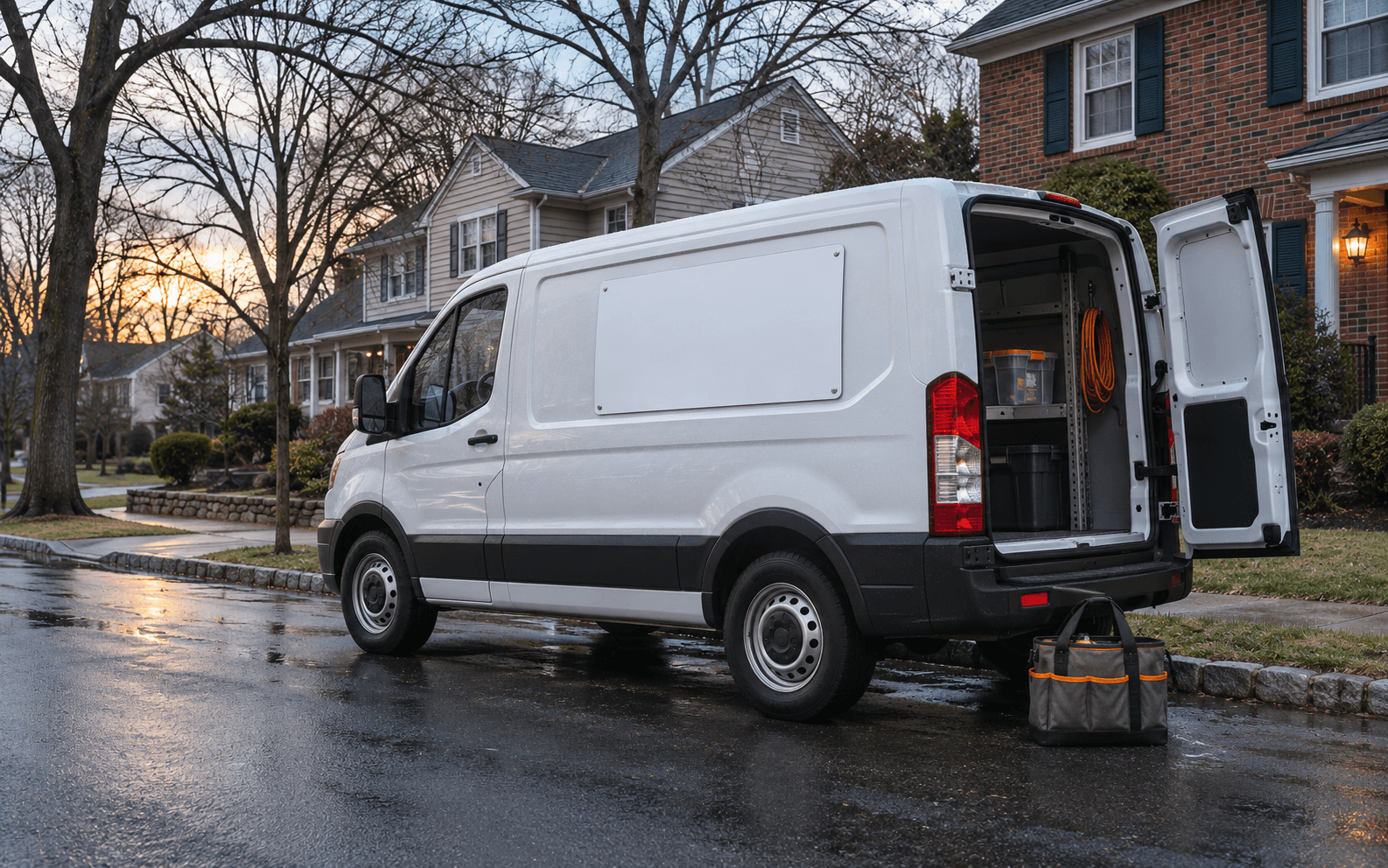
For a home-service business, the vehicle at the curb often arrives before the technician. Its job is to make the visit easier to recognize and receive.
8 min read
A home-service identity works when the vehicle, appointment message, doorstep behavior, and follow-up use the same clear practical signals.
In this article
- 01The curb gets there before the conversation
- 02Recognition is practical courtesy
- 03Make the visit read as one route
- 04The return trip starts at the doorstep
The curb gets there before the conversation
On a wet North Jersey morning, a service vehicle at the curb can raise a question before anyone rings a bell. Is this the expected visit? Which house are they here for? Should a customer move a car, secure a dog, clear a basement door, or simply wait? In close-set neighborhoods, a vehicle is not background scenery. It is the first public object in a private appointment.
A work truck is not merely a moving billboard. It is an orientation device. A calm, legible identity, an appointment message that uses the same name, and a realistic arrival window help a customer connect the curb to the booking they made. It needs useful facts to arrive together, not oversized promises.
Recognition is practical courtesy
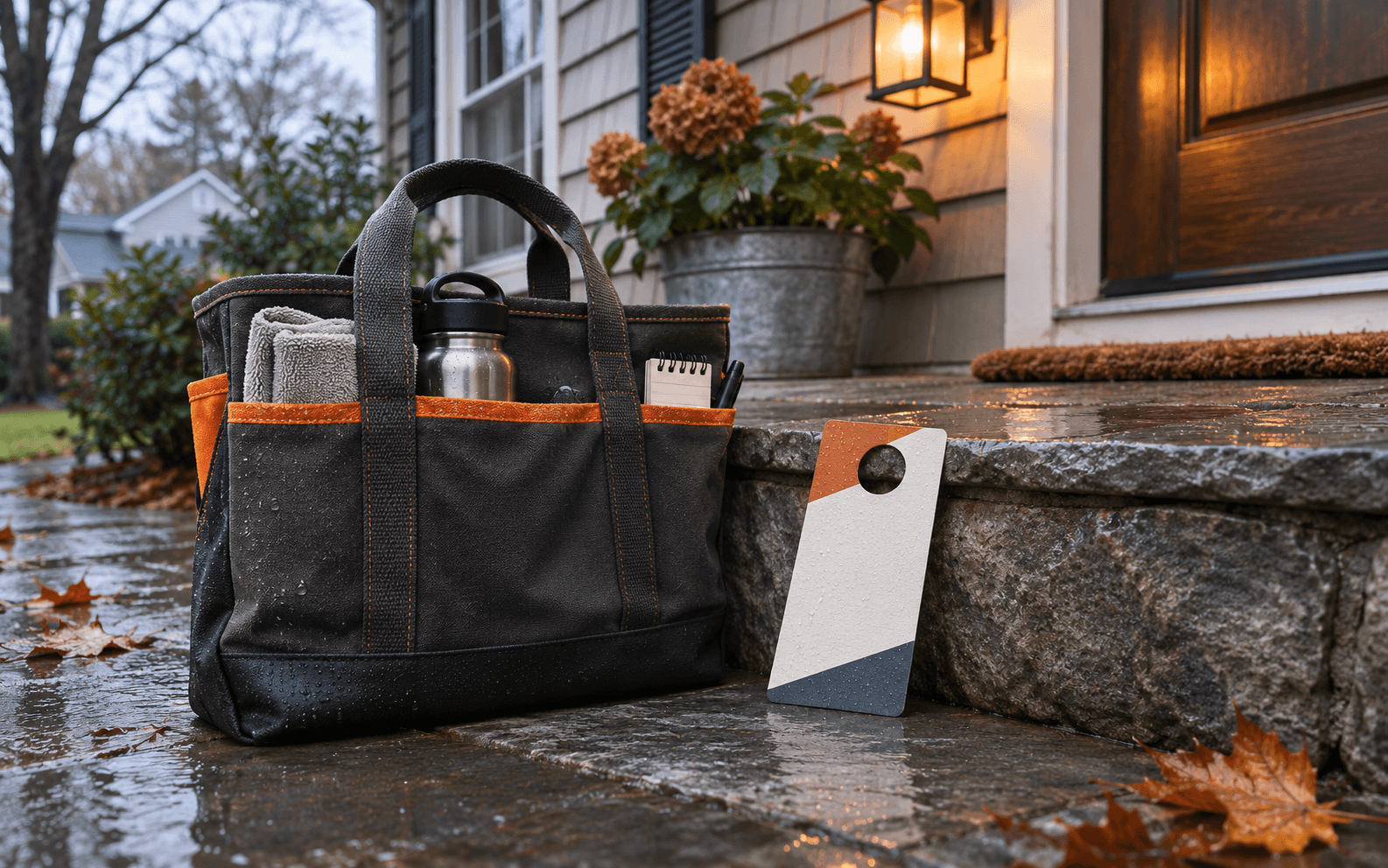
A customer should not have to match a vague text message to an unmarked van by intuition. Use the same business name, phone number, and service language across booking confirmation, vehicle graphics, door card, estimate, and follow-up. If the visit involves a specific technician or a changed arrival window, say only what the business can reliably confirm.
For New Jersey home-improvement work, the Division of Consumer Affairs provides public guidance on contractor registration and consumer protections. Requirements vary by work and business type, so a decorative badge cannot substitute for compliance. The practical design question is which identity and contact details a customer should be able to verify at the curb and in their records.
Make the visit read as one route
Map the visit in the order a homeowner experiences it. First, the booking establishes who is coming and when. Then the vehicle makes that expectation visible. At the door, a short introduction and a clear first task keep the transition human. During the work, a simple leave-behind can state what was done, what needs attention, and how to ask a follow-up question.
The map exposes production problems: an old phone number, a quote that uses different service language, small type too dense for a rainy porch, or a seasonal crew without approved files. These are brand questions because they shape how dependable the business appears when the owner is not there to explain it.
- Use one approved name, phone number, and service vocabulary across the route.
- Make key identification readable at the customer’s distance and lighting.
- State arrival changes and scope limits plainly.
- Keep editable source files and production specifications for updates.
The return trip starts at the doorstep
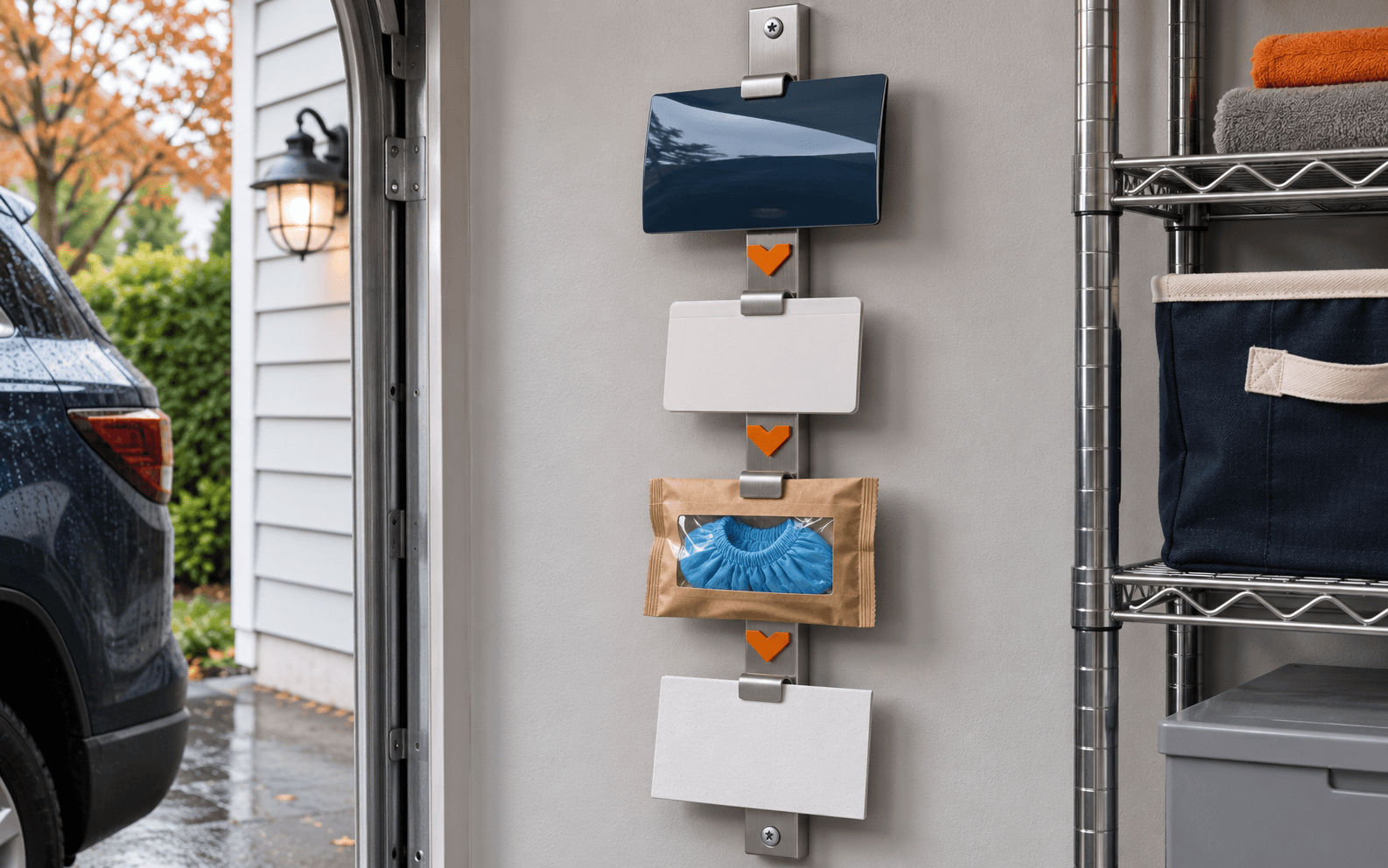
After a technician leaves, a customer may be looking at a changed room, a repair they cannot fully see, or a next step they will remember imperfectly. A concise follow-up that matches the identity at the curb can clarify the contact route, service record, and what to do if a question appears later.
Visual Square connects identity, vehicle graphics, appointment materials, web pages, and production files because home-service trust is built in ordinary transitions. The work truck does not have to carry the whole brand story. It only has to answer the first question honestly: yes, this is the visit you expected.
Frequently asked questions
What information should be on a home-service vehicle?
Use the approved identity and reliable contact details needed to recognize the appointment. Confirm legal or licensing information with applicable state and local rules.
How can a contractor make arrival feel more professional?
Keep the booking confirmation, vehicle, doorstep introduction, work materials, and follow-up consistent. State timing changes and scope limits clearly.
Need a sharper customer-facing system?
Improve consistency across the brand, website, and sales materials.
Visual Square helps NY/NJ businesses clean up the touchpoints customers actually see first, so the brand feels clearer, more credible, and easier to trust.
Talk through the refresh