
Article · Jun 30, 2026
Small-Batch Packaging and Print: How Physical Details Make Local Brands Feel More Real
Why tactile print and packaging details matter for restaurants, retail shops, cafes, and local service brands trying to build trust.
10 min read
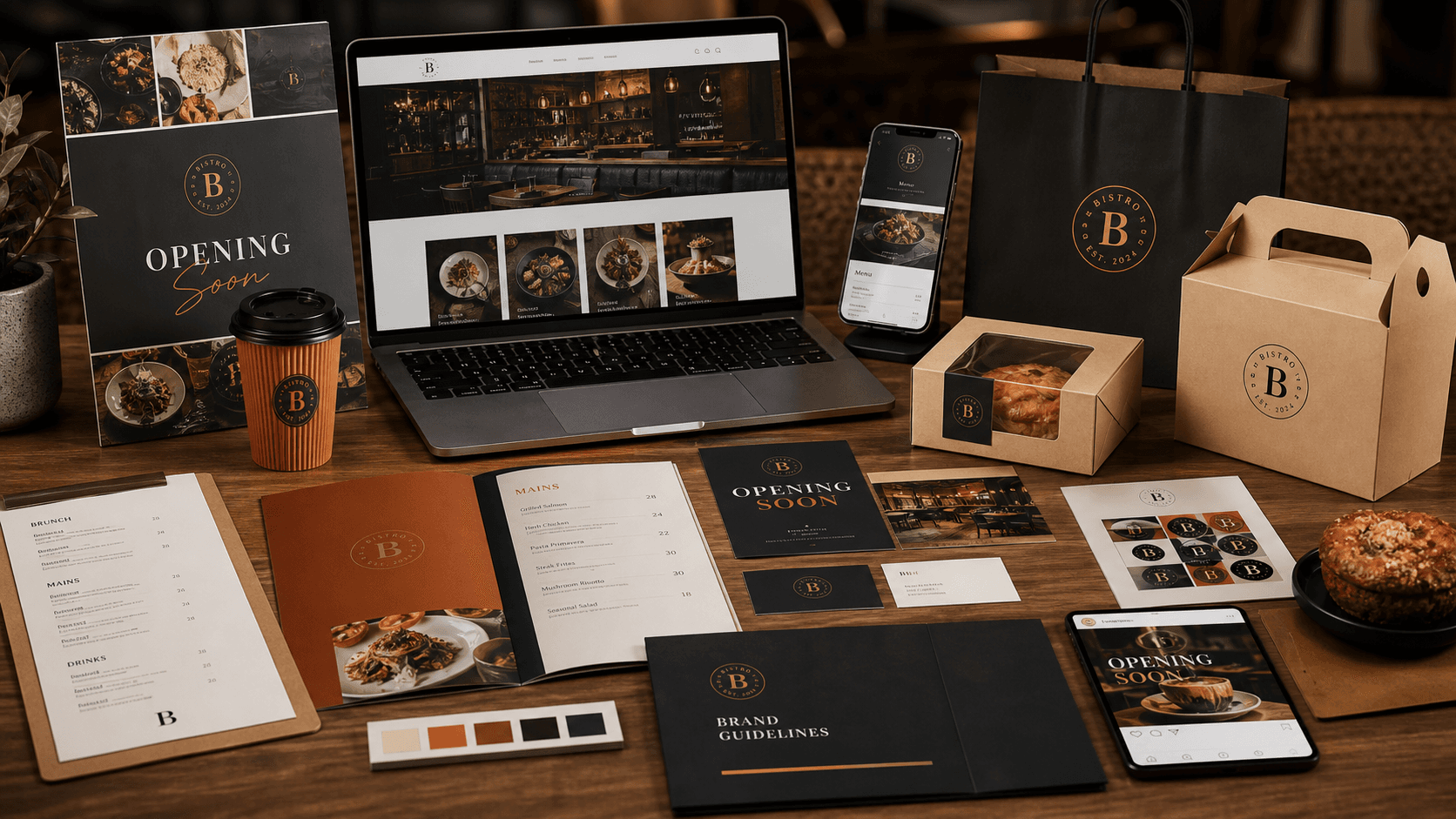
Physical details can make a local brand feel more real, memorable, and trustworthy when they are designed as part of the same system as the website and marketing assets.
In this article
- 01Physical details still shape brand memory
- 02Small batch can be strategic
- 03Tactile does not mean overdesigned
- 04Print and packaging should not be isolated
- 05Production-ready files protect the experience
- 06Where NY/NJ businesses should start
Physical details still shape brand memory
A customer may discover a business online, but they often remember it through a physical detail: a menu, a card, a box, a sticker, a receipt insert, a product label, or a printed service sheet.
Those details make the brand feel real. They also create small moments of trust. When the piece feels intentional, the business feels more careful. When it feels generic or poorly produced, the customer notices even if they do not say it out loud.
Small batch can be strategic
Small businesses do not need to order huge quantities of every print or packaging asset. A better approach is to identify the few physical touchpoints that customers are most likely to see, keep, photograph, or share.
For a cafe, that might be cup stickers, pastry box labels, loyalty cards, and menu inserts. For a retail shop, it might be product cards, thank-you inserts, bag stickers, and lookbook sheets. For a service business, it might be appointment cards, referral cards, and high-quality one-pagers.
- Choose the physical pieces customers actually touch.
- Use paper, finish, scale, and texture to reinforce the brand tone.
- Design each piece for production, not only for a mockup.
- Connect print pieces to web pages, booking links, or social profiles when useful.
Tactile does not mean overdesigned
A tactile brand detail can be simple. Better paper, a tighter layout, a clean label, a quiet color palette, or a well-placed logo can do more than a crowded design with too many effects.
The strongest physical details usually feel natural to the business. A wellness brand might use soft finishes and calm spacing. A restaurant might use warmer paper and menu typography. A professional service firm might use crisp proposal covers and clean cards.
Print and packaging should not be isolated
Physical materials work better when they connect to the website, social content, and campaign assets. If the package looks premium but the landing page looks unfinished, the trust signal breaks.
That is why print and packaging should be planned as part of the larger brand system. Colors, typography, imagery, QR code destinations, file preparation, and campaign messaging should be aligned before production starts.
Production-ready files protect the experience
The most common problem is not the idea. It is execution. Labels may be the wrong size, menus may not have bleed, photos may print poorly, or colors may shift because files were not prepared correctly.
Production-ready files help the physical experience match the intended brand. They also reduce vendor confusion and make it easier to reorder or expand the system later.
Where NY/NJ businesses should start
Start with the first physical moment after discovery. If the customer books online and visits in person, the appointment card, intake material, or service menu may matter most. If the customer buys food or retail products, packaging and inserts may matter more.
Once that first touchpoint is clear, design the piece with the same logic as the website: clear hierarchy, brand consistency, useful information, and a next step. That is how physical materials become more than decoration.
Frequently asked questions
What is small-batch packaging?
Small-batch packaging uses smaller quantities of labels, stickers, inserts, cards, boxes, or bags so a business can create branded physical touchpoints without overcommitting to large runs.
Which physical brand materials should a local business create first?
Start with the pieces customers touch most often, such as menus, labels, cards, inserts, packaging stickers, referral cards, or service one-pagers.
Does tactile print matter for service businesses too?
Yes. Service businesses can use high-quality cards, brochures, proposal covers, appointment materials, and referral pieces to reinforce trust.
How should print connect to digital marketing?
The print piece should use the same visual system and, when useful, guide customers to a clear landing page, booking page, menu page, or social profile.
Need stronger production support?
Turn the design system into vendor-ready files that actually ship well.
We help organize brochures, decks, flyers, menus, and other customer-facing materials so they stay consistent from layout through production handoff.
Review the asset system