
Article · Aug 14, 2026
The Window Display Is a Local Marketing Page
Why NY/NJ retail and showroom brands should treat window displays, product cards, shelf labels, lookbooks, and social crops as one local marketing system.
8 min read
A retail window is a local marketing page with glass, light, product cards, and passing attention. Strong showroom brands connect the display to product labels, lookbooks, social crops, and production-ready campaign files.
In this article
- 01The window is already publishing
- 02Atmosphere needs a sentence
- 03The display should create reusable assets
- 04Trend should be filtered through the block
- 05Design the window like the first page of a visit
The window is already publishing
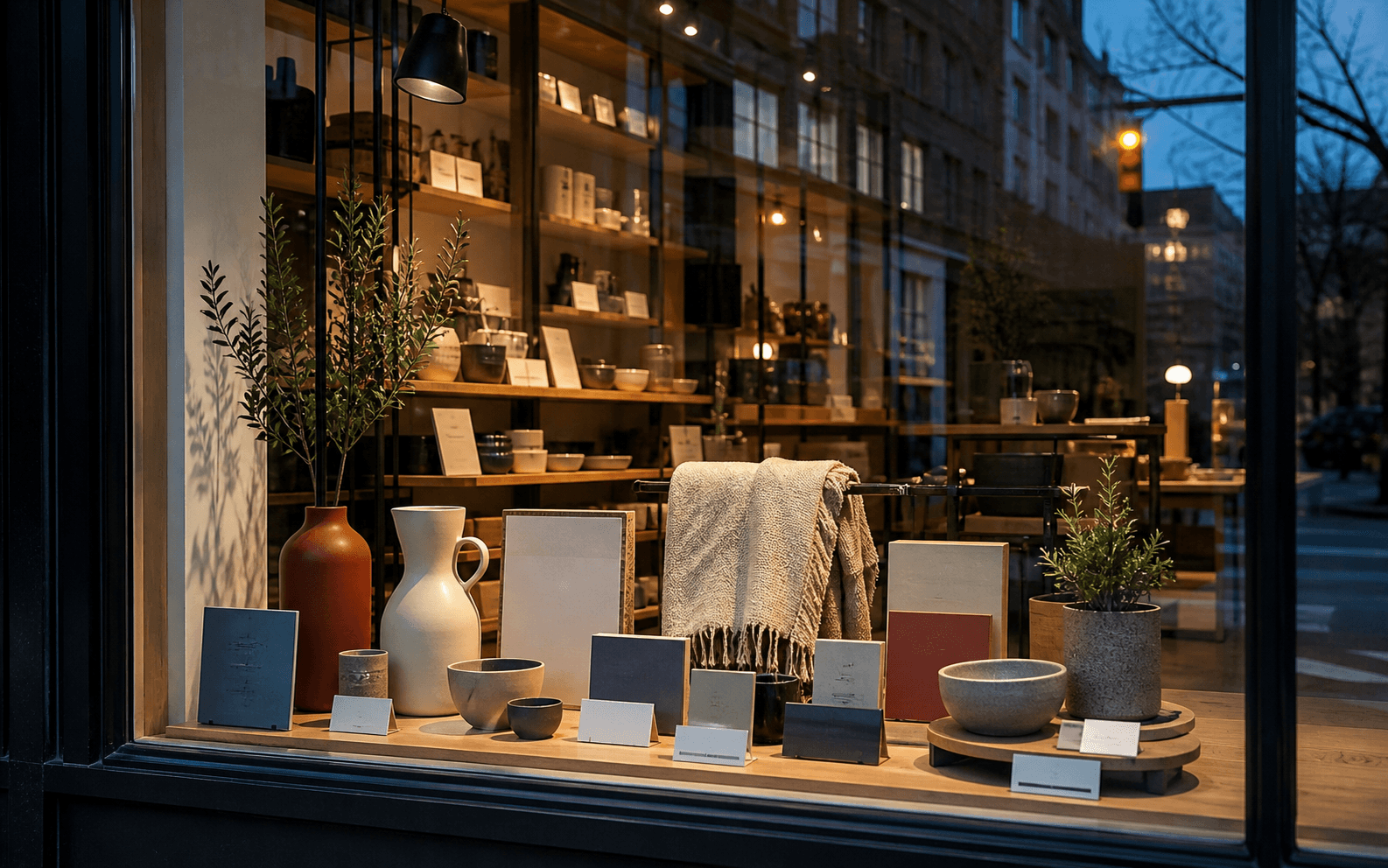
A retail window does not wait for the marketing calendar. It publishes every morning, whether the team planned it or not. People pass with coffee, strollers, headphones, umbrellas, and half a minute of attention. They may not enter, but they still file away a judgment.
For a NY/NJ showroom or specialty retail store, that window is not decoration after the brand work is done. It is a local marketing page made of glass, light, product groupings, labels, cards, and distance. If it does not explain anything, the passerby has to admire first and understand later. Many will not stay that long.
Atmosphere needs a sentence
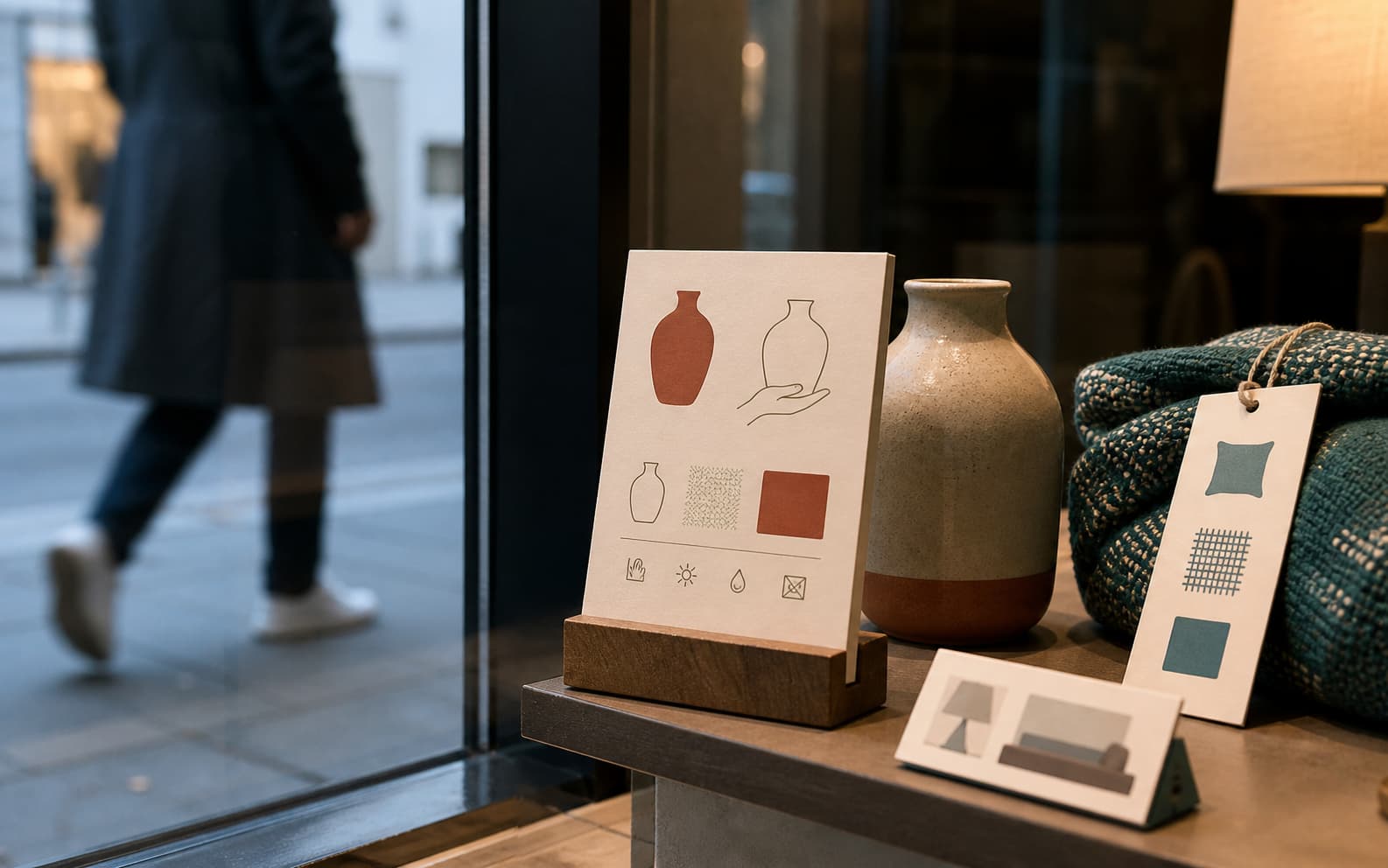
Retail brands are often good at atmosphere. The objects are arranged carefully. The light feels pleasant. The materials have taste. But atmosphere alone can become a closed room. The customer still wants to know what kind of product this is, why it is grouped this way, what price level to expect, and whether the store fits the errand in their head.
That does not mean turning the window into a billboard. It means giving the display one legible sentence through hierarchy. A product card, shelf label, category tag, material note, QR handoff, or small lookbook cue can help the shopper understand the invitation without flattening the mood.
- Use one clear display idea instead of many unrelated product moments.
- Make product cards readable from the likely viewing distance.
- Let material, color, and lighting support information rather than replace it.
- Plan a social crop and Google profile crop while the display is being built.
The display should create reusable assets
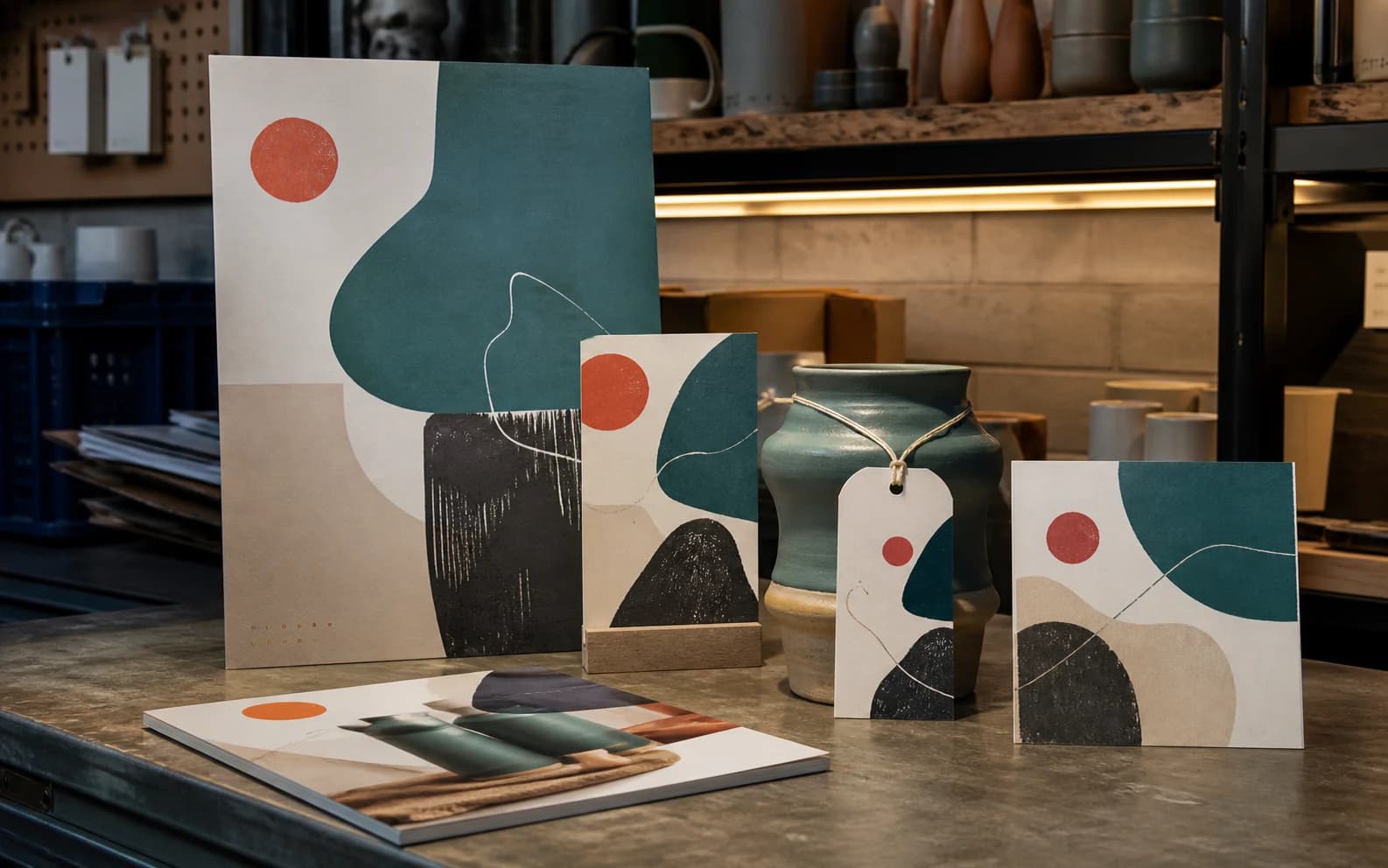
A window reset takes effort. If it ends only as a pleasant arrangement behind glass, the work is underused. The same display can become a website category image, Google Business Profile photo, Instagram carousel cover, printed lookbook page, email feature, in-store shelf talker, and seasonal campaign card.
This is where production planning matters. Shoot the display wide, medium, and close. Keep the product labels clean. Prepare square, vertical, and horizontal crops. Save a print-ready version of the card and an editable file for the next collection. A good retail system turns one display into several disciplined assets.
Trend should be filtered through the block
Current creative reports point toward tactile, grounded, locally specific visuals. Pinterest's 2026 palette signals saturated color return, while Adobe and Canva both describe a shift away from generic polish toward sensory, human, and intentional presence. Those are useful signals, not assignments.
A retail store should filter trends through its actual block. What does the sidewalk light do at 5 p.m.? What can be seen through reflections? Which product card is readable from outside? Which material makes sense in the customer's hand? Local application is where a trend stops being a mood board and becomes a working decision.
Design the window like the first page of a visit
The practical starting point is simple: stand outside and ask what the window says in five seconds. Then step inside and ask whether the product cards, shelf labels, lookbook, website image, and social post continue the same sentence.
When they do, the store feels less like a collection of nice objects and more like a point of view. The window is still a window. It also becomes a local marketing page that happens to catch the morning light.
Frequently asked questions
Why is a retail window display a marketing asset?
It shapes local awareness before a shopper enters and can supply visuals for Google profiles, social posts, website sections, lookbooks, email, and in-store cards.
What should a retail display system include?
Include a display concept, product cards, shelf labels, material notes, image crops, social covers, website images, and print-ready campaign files.
How can a showroom avoid generic window displays?
Start with the store's actual products, materials, sidewalk view, lighting, customer questions, and local context instead of copying a broad trend wholesale.
Need a sharper customer-facing system?
Improve consistency across the brand, website, and sales materials.
Visual Square helps NY/NJ businesses clean up the touchpoints customers actually see first, so the brand feels clearer, more credible, and easier to trust.
Talk through the refresh