
Article · Oct 23, 2026
The Receipt Has Another Job
For a restaurant, the final check can do more than close a payment. It can make the next visit easier to imagine and act on.
8 min read
A receipt is a small, unglamorous piece of restaurant communication. When it belongs to the same system as the reservation, menu, and follow-up, it can make a return feel natural rather than promotional.
In this article
- 01The little curl of paper is still in the story
- 02Do not mistake a return invitation for a discount machine
- 03Make the last touchpoint answer one useful question
- 04The system is bigger than the check presenter
- 05Let the last object keep the room's promise
The little curl of paper is still in the story
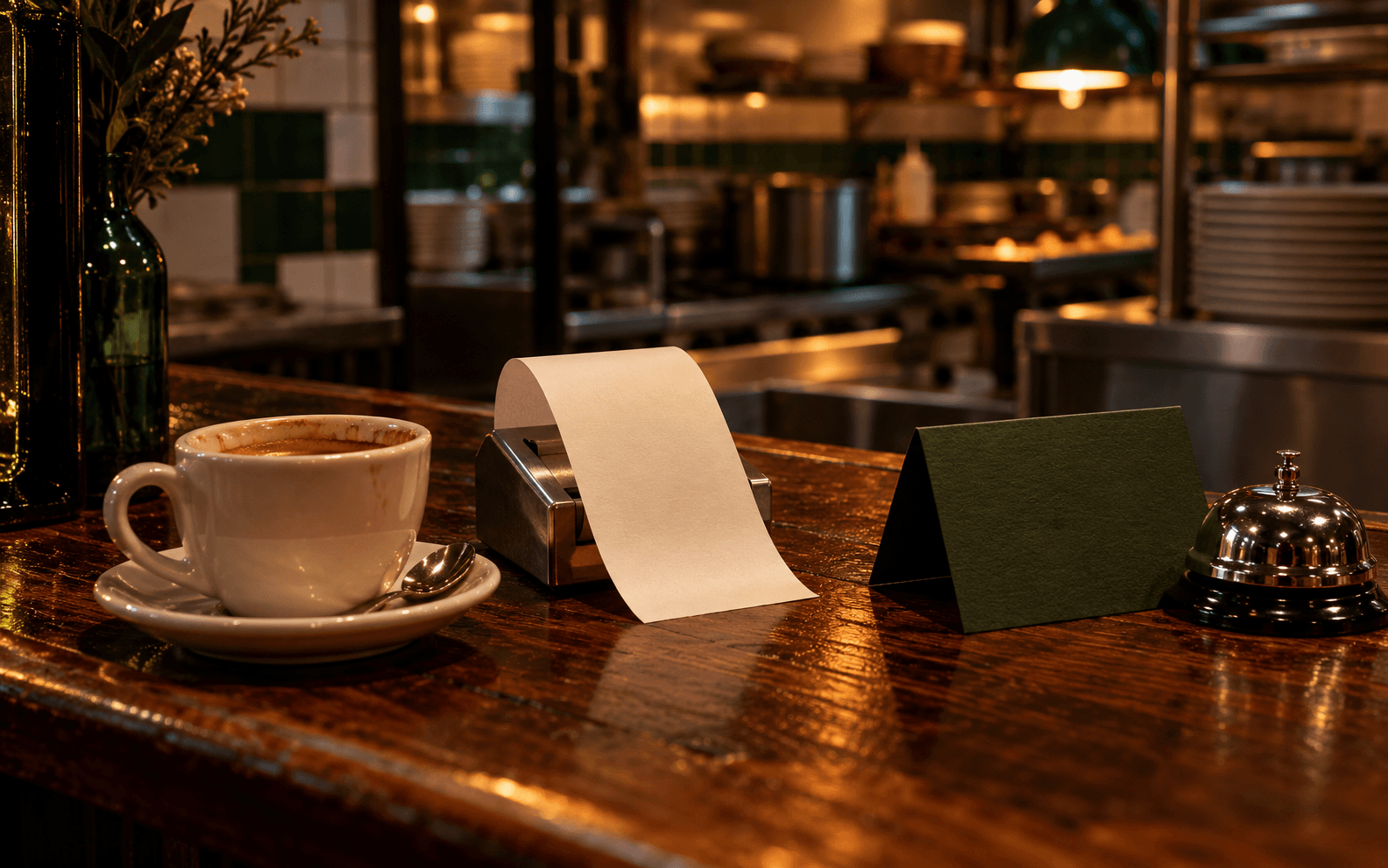
Near the end of dinner, a receipt arrives in a leather folder, on a small plate, or in the hand of someone who has already turned toward the next table. It is easy to treat the paper as a purely operational object: totals, tip line, card machine, done. Yet it is one of the last things a guest handles before deciding whether the evening belongs in memory or merely in a transaction history.
No receipt can rescue an indifferent meal. It should not try. But a restaurant that has paid attention to the room, the menu, and the departure can make that last object feel like part of the same hospitality. The question is not how to turn a check into an advertisement. It is how to avoid ending a considered experience with a shrug.

Do not mistake a return invitation for a discount machine
The usual response is a coupon, a crowded QR code, or a string of social handles added to the bottom of the check. Those devices can be useful in a specific campaign, but they are not a restaurant strategy by themselves. A guest who has just enjoyed a composed meal does not necessarily need six new instructions. They may need a simple reason to remember the place and a frictionless way to come back when the occasion appears.
Sometimes that means a clear reservation route. Sometimes it is a takeout or catering cue that makes sense for the restaurant. Sometimes it is nothing more than a beautifully consistent receipt sleeve, accurate hours, and an online profile that helps a friend find the same place. Restraint is not a refusal to market. It is an understanding of the moment.
Make the last touchpoint answer one useful question
A guest leaving a neighborhood restaurant may wonder whether it is open on Monday, whether a group can reserve, whether the restaurant can handle an office lunch, or whether there is a reason to return in another season. One modest answer can be more helpful than a promotional parade. The answer must be true, current, and easy to find again after the receipt has been folded into a pocket.
That is why the final touchpoint should be designed with operations, not only with marketing. If the reservation system, hours, catering capacity, or menu cadence changes, the printed piece and the web route need a clear owner. Nothing makes a local restaurant feel less cared for than an invitation that leads to an old phone number, an expired offer, or a closed booking page.
- Choose one return-visit action that fits the restaurant's real operating model.
- Keep service hours, address, reservation links, and profile details aligned.
- Make any seasonal or promotional message time-bounded and easy to remove.
- Test the path a guest would use after leaving the dining room.
The system is bigger than the check presenter
The receipt works best when it is not expected to carry the entire return journey. A reservation confirmation can set expectations before the meal. A menu can express the restaurant's voice at the table. Takeout packaging can help a meal travel well. A Google profile can answer basic discovery questions. A follow-up message can be appropriate when a guest has chosen to receive one. Each object gets a smaller, more credible job.
For a restaurant team, this reduces the familiar scramble before a seasonal launch or busy weekend. Instead of inventing a new promotion for every surface, the team maintains a few approved facts, a few usable crops, and clear production files. The guest sees continuity rather than a buffet of unrelated marketing ideas.
Let the last object keep the room's promise
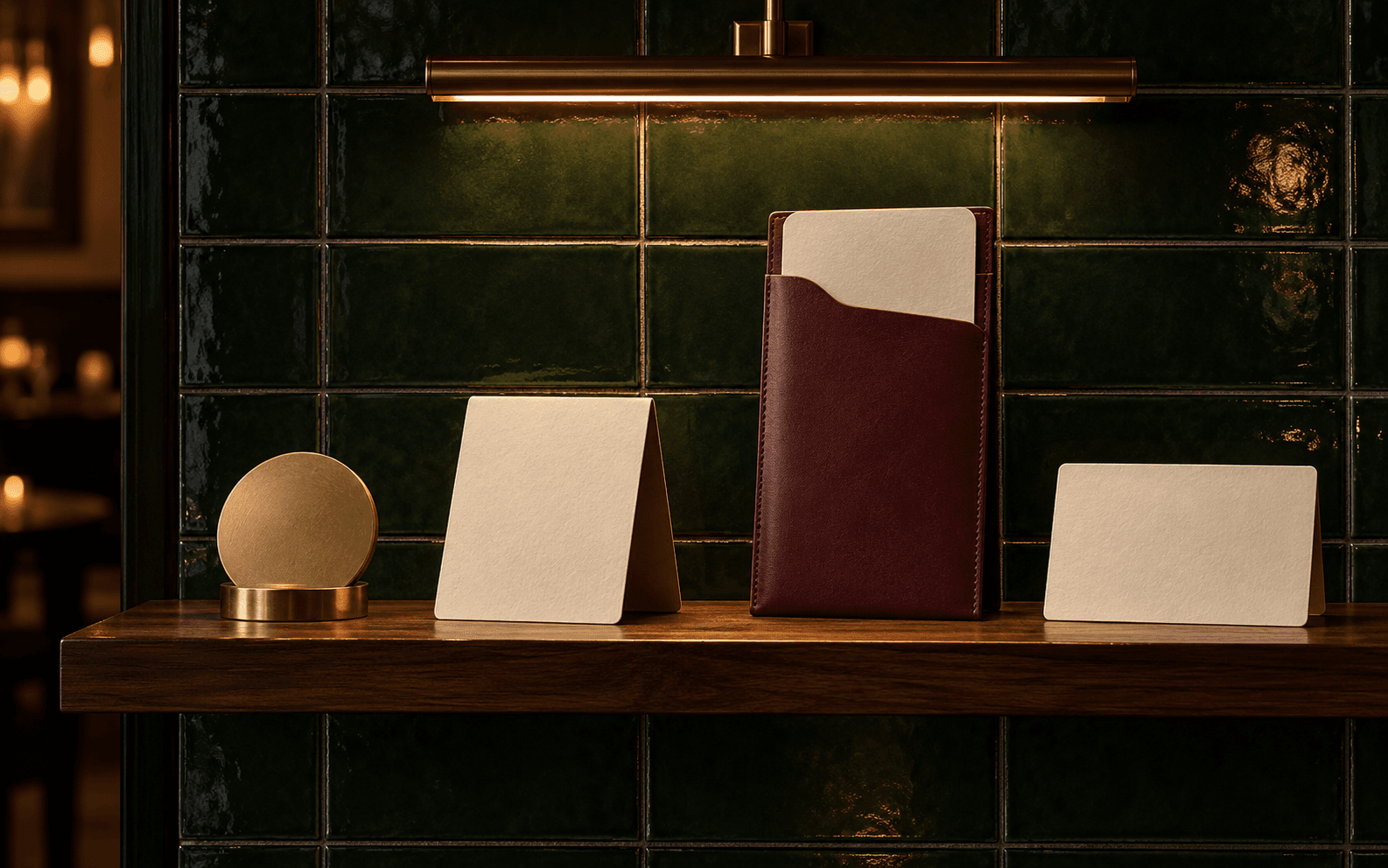
Restaurant branding is often judged at the big moments: the sign, the dining room, the menu cover, the opening announcement. Those matter. But a brand earns credibility in the unphotographed moments too—the booking confirmation, the restroom sign, the takeout label, and the quiet exchange when the meal is over.
A good receipt will not ask a guest to become a marketing channel on the walk home. It will simply make the next visit legible. The small curl of paper can leave the table carrying the same care that brought the first course to it.
Frequently asked questions
Should a restaurant put promotions on every receipt?
No. Use a promotion only when it is timely, accurate, and useful to the guest. A clear reservation, location, or return-visit route can be more appropriate than a permanent discount message.
What information should restaurant receipts or check presenters carry?
The required payment information comes first. If the restaurant adds brand or return information, keep it concise, accurate, and connected to one practical next step such as reservations, hours, takeout, or a seasonal program.
How can a restaurant keep printed and online information consistent?
Assign ownership for core facts such as name, address, hours, reservation route, and service offerings, then review the receipt, website, profile, takeout materials, and campaign assets whenever operations change.
Need a sharper customer-facing system?
Improve consistency across the brand, website, and sales materials.
Visual Square helps NY/NJ businesses clean up the touchpoints customers actually see first, so the brand feels clearer, more credible, and easier to trust.
Talk through the refresh