
Article · Jul 23, 2026
Restaurant Launch Systems for AI Search and Visual Discovery
How NY/NJ restaurants and cafes can connect menus, packaging, Google and social profile visuals, website structure, and production-ready files before launch.
12 min read
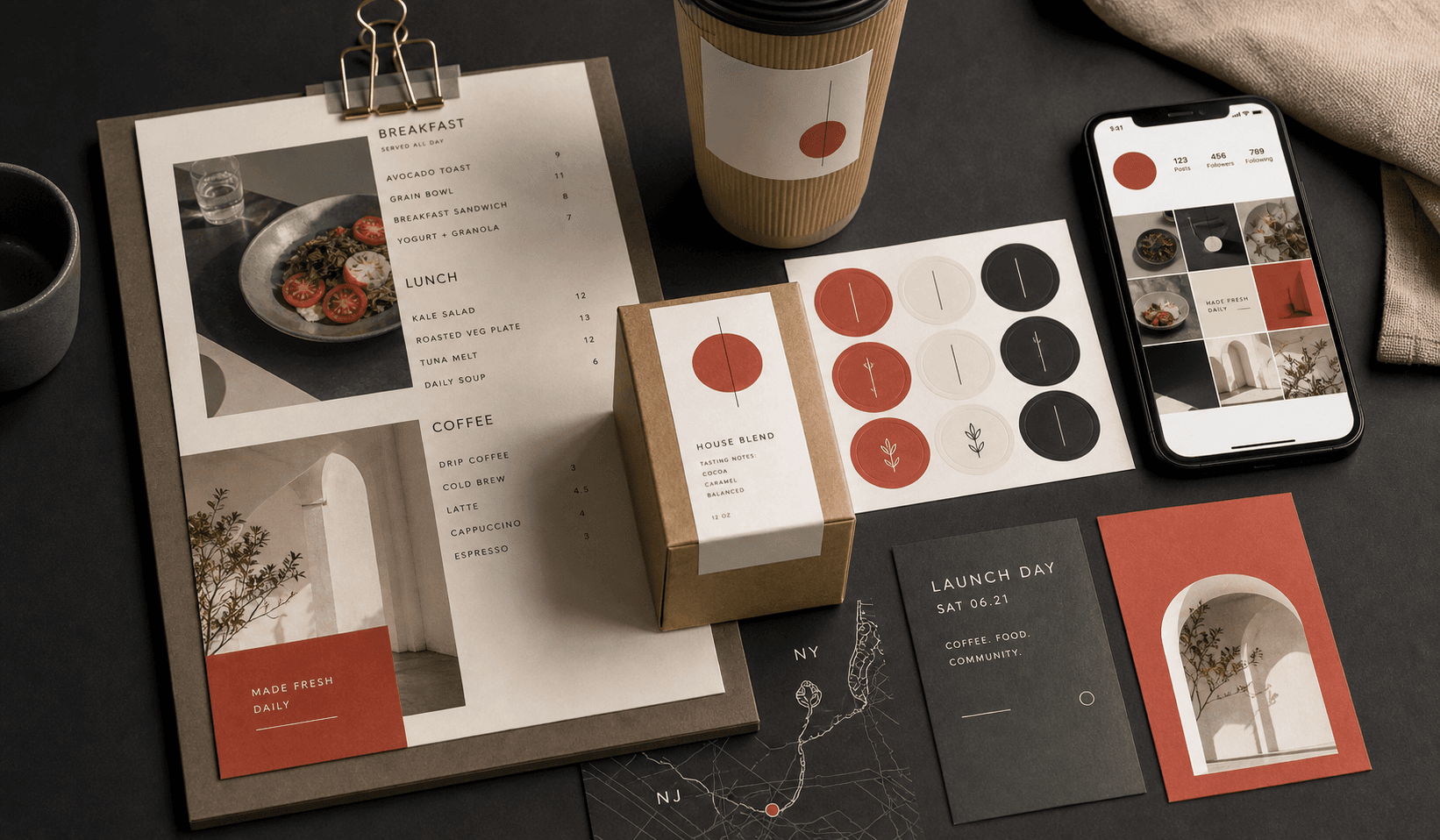
Restaurant and cafe launches now depend on more than a logo and menu. The strongest openings connect tactile print, packaging, profile visuals, website answers, and reusable production files so customers can recognize, trust, and choose the business across search, social, and street-level touchpoints.
In this article
- 01Discovery is now visual and answer-driven
- 02Start with the menu as the source system
- 03AI search needs clear restaurant answers
- 04Profile visuals are brand assets, not leftovers
- 05Small-batch packaging can build trust
- 06Connect print, web, social, and operations
- 07A realistic launch sequence for NY/NJ food businesses
Discovery is now visual and answer-driven
A restaurant or cafe launch used to be planned around a storefront, a printed menu, and a few social posts. Those still matter, but customers now discover food businesses through a wider set of surfaces: Google Business Profile photos, map results, Instagram grids, short videos, review snippets, AI search summaries, delivery platform cards, neighborhood flyers, and text messages from friends. The first impression may be a square image, a menu crop, a generated answer, or a printed card on a counter.
That changes the role of design. The launch system needs to make the business easy to understand before the customer visits. For a NY/NJ cafe, bakery, restaurant, dessert shop, or takeout concept, the brand should answer practical questions quickly: what kind of food is this, what does it feel like, where is it, when is it open, what should I order first, is the menu current, and does the place feel worth the trip?
Start with the menu as the source system
The menu is usually the most important content document for a food business. It defines categories, names, price rhythm, signature items, dietary notes, photography priorities, packaging needs, and the voice of the brand. If the menu is only treated as a final print file, every other channel has to guess how to explain the business.
A stronger launch starts by turning the menu into a source system. The dine-in layout, takeout menu, website menu page, Google product or menu images, Instagram carousel, printed neighborhood flyer, and delivery platform visuals should all use the same item names, category logic, photo direction, and hierarchy. That consistency helps customers, staff, designers, printers, and search systems understand the business the same way.
- Define menu categories before designing the website navigation.
- Choose signature items that can become hero photos, profile images, and launch offers.
- Write short item descriptions that work on menus, website sections, and social cards.
- Keep prices, allergens, modifiers, and ordering notes in one editable source before export.
AI search needs clear restaurant answers
Recent SEO and marketing discussions keep pointing to the same shift: search is moving from ranked links toward direct answers, summaries, and contextual recommendations. For restaurants, that does not mean writing robotic copy. It means making the website and profile content structured enough for people and AI systems to understand the concept.
A launch website should have clear sections for cuisine, location, neighborhood, hours, ordering options, reservations, dietary notes, catering or private events when relevant, signature items, parking or transit context, and frequently asked questions. A vague homepage with a beautiful photo but little structured information leaves discovery work to platforms. A useful site gives search systems and customers enough context to describe the business accurately.
Profile visuals are brand assets, not leftovers
Many restaurants upload whatever photos are available to Google, Yelp, Instagram, and delivery platforms, then wonder why the brand looks inconsistent. Profile visuals are often the first brand assets customers see. They deserve the same care as the menu cover or storefront window graphic.
A practical visual set should include square crops for Google and social profiles, a clean exterior or counter image, a few signature dish photos, packaging details, menu detail shots, interior atmosphere, and campaign graphics with short readable titles. These assets should feel related without becoming repetitive. In dense NY/NJ food corridors, specificity matters: customers need to see what makes this cafe, bakery, or restaurant different from the next option on the map.
- Design profile images around recognition, not decoration.
- Use real menu, packaging, and food details instead of generic lifestyle imagery.
- Crop separately for Google, Instagram, website cards, email headers, and print.
- Keep launch announcements short enough to read in small mobile previews.
Small-batch packaging can build trust
Packaging and print trends are leaning toward tactile detail, small-batch customization, cleaner materials, and more intentional physical touchpoints. That is especially useful for new food businesses because customers may handle a cup sleeve, pastry box, sticker, loyalty card, bag label, or catering insert before they ever remember the logo.
Small-batch does not mean cheap or temporary. It means the business can test seasonal labels, neighborhood opening cards, limited menu inserts, catering tags, or product stickers without committing to huge inventory. When the paper, label size, finish, color, and typography match the website and menu, the brand feels more real. When those pieces are rushed at the last minute, even good food can feel less prepared.
Connect print, web, social, and operations
The most common launch problem is fragmentation. The menu is designed in one file, the website is written in another, the Google images are cropped from random photos, the packaging label is made by the printer, and the social graphics are assembled the night before opening. Each item may be acceptable alone, but the total experience feels pieced together.
A restaurant launch system should connect brand identity, web design, print collateral, packaging, marketing assets, and production-ready files before the public rollout. That does not require a giant brand manual. It requires practical rules: approved logo exports, type styles, color values, menu hierarchy, image crops, short descriptions, print specs, social cover titles, and folder naming that staff and vendors can actually use.
- Prepare print-ready menus, flyers, packaging labels, and promo cards with bleed and export specs.
- Export web images and social crops from the same approved visual direction.
- Store Google profile photos, Instagram covers, and website thumbnails in channel-specific sizes.
- Keep editable source files separate from final vendor PDFs and posted social exports.
A realistic launch sequence for NY/NJ food businesses
Start four to eight weeks before launch by confirming the concept, menu structure, signature items, audience, neighborhood context, and required customer actions. Then build the identity and menu system together. Once the menu hierarchy is stable, translate it into the homepage, menu page, Google visuals, packaging labels, launch flyer, social carousel, and local offer card.
The final phase should be production, not panic. Print a test menu. Check whether small type is readable under restaurant lighting. Review packaging labels on the actual container. Crop Google and Instagram images on a phone. Make sure hours, address, ordering links, and FAQs match across the site and profiles. A launch that feels specific, tactile, searchable, and operationally organized gives a new restaurant a stronger chance to turn first attention into first visits.
Frequently asked questions
What belongs in a restaurant launch system?
Brand identity, menu structure, website or landing page, Google and social profile images, packaging labels, flyers, social graphics, print-ready files, and channel-specific image crops.
Why does AI search readiness matter for restaurant websites?
When AI search and summary systems can clearly understand cuisine, location, hours, ordering options, signature items, and FAQs, the business is easier to describe accurately to potential customers.
Should a small cafe invest in small-batch packaging?
If customers handle cups, stickers, box labels, loyalty cards, or inserts, small-batch packaging is a practical way to make the brand more memorable.
Which files should be organized before opening?
Start with the menu source file, logo exports, print-ready menus and flyers, web images, Google profile photos, social covers, packaging label sources, and final vendor PDFs.
Need a cleaner launch system?
Plan the brand, website, and launch materials as one system.
Visual Square helps NY/NJ businesses align identity, web structure, printed materials, and production-ready files before launch dates get tight.
Talk about the launch