
Article · Jun 16, 2026
Real Estate Marketing Design: Brochures, Listing Decks, and Digital Assets
How real estate teams can create more consistent property marketing across brochures, decks, web pages, and campaigns.
8 min read
Real estate marketing design should make property information easier to scan and more credible across print and digital formats.
In this article
- 01Property marketing is information design
- 02Build reusable listing systems
- 03Digital and print should come from the same source
- 04Design should support quick trust
- 05Make the files easy for teams to use
Property marketing is information design
Real estate collateral has to present photos, facts, maps, amenities, neighborhood context, and financial or leasing details without overwhelming the reader. The design problem is not simply making the property look attractive. It is helping the prospect understand value quickly.
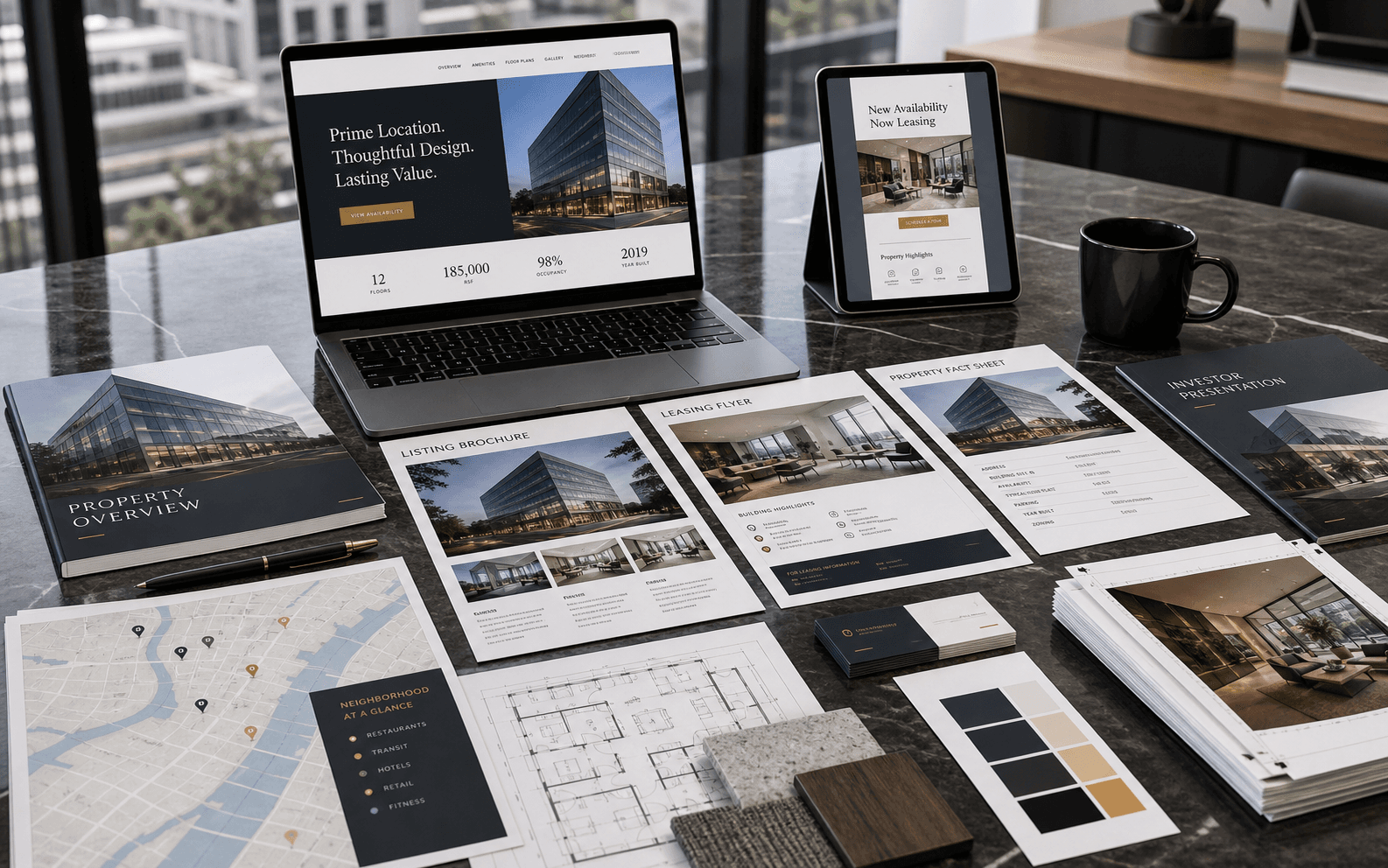
A listing brochure, leasing deck, property website, email PDF, and social campaign should all share one information structure. When each asset is designed separately, the same property can feel inconsistent across channels.
Build reusable listing systems
A strong brochure or deck system can support multiple properties with consistent layouts for highlights, specs, location, photography, and calls to action.
Reusable does not mean generic. It means the team has a flexible framework for different property types: retail leasing, office, multifamily, mixed-use, hospitality, or development marketing. Each can adapt the system without starting from zero.
- Cover and summary pages for quick scanning
- Photo-led pages with consistent captions and specs
- Location, map, access, and neighborhood context layouts
- Financial, leasing, or availability tables designed for readability
Digital and print should come from the same source
Real estate teams often need both a polished PDF and a printed brochure. If those are treated as separate designs, updates become slow and mistakes become more likely.
The better approach is to build a source structure that can export into deck pages, print spreads, web sections, and email graphics. That keeps the facts consistent and makes future updates faster when availability, pricing, or imagery changes.
Design should support quick trust
In NY/NJ property marketing, prospects often compare locations quickly. They need to understand the offer, the neighborhood, the access, the property condition, and the next step without digging.
Strong hierarchy, restrained typography, consistent photography treatment, and clear call-to-action areas make the material feel more credible. Poor formatting can make even a strong property feel harder to trust.
Make the files easy for teams to use
A real estate marketing system is only useful if brokers, owners, and marketing teams can keep using it. That means organized templates, export-ready PDFs, print-ready files, and image rules that prevent every new listing from becoming a design emergency.
The goal is a production-ready system that looks polished but also survives real updates, tight deadlines, and multiple stakeholders.
Frequently asked questions
What should a real estate brochure include?
Key property facts, strong photography, location context, amenities, floor plans or maps when relevant, and a clear next step for the prospect.
Can property decks and brochures share one design system?
Yes. That is usually the best approach because it keeps print and PDF materials consistent.
Why does real estate marketing need strong information hierarchy?
Because prospects need to compare facts quickly. Good hierarchy helps photos, specs, maps, and next steps stay clear instead of competing for attention.
Should a property brochure be designed for both print and PDF?
Usually yes. The same source system can support print-ready files, digital PDFs, web sections, and email-ready campaign assets.
Need stronger production support?
Turn the design system into vendor-ready files that actually ship well.
We help organize brochures, decks, flyers, menus, and other customer-facing materials so they stay consistent from layout through production handoff.
Review the asset system