
Article · Oct 6, 2026
Property Marketing Needs Sequence
Open-house materials, listing photos, follow-up emails, and print pieces work better when they show the buyer a path through the place.
7 min read
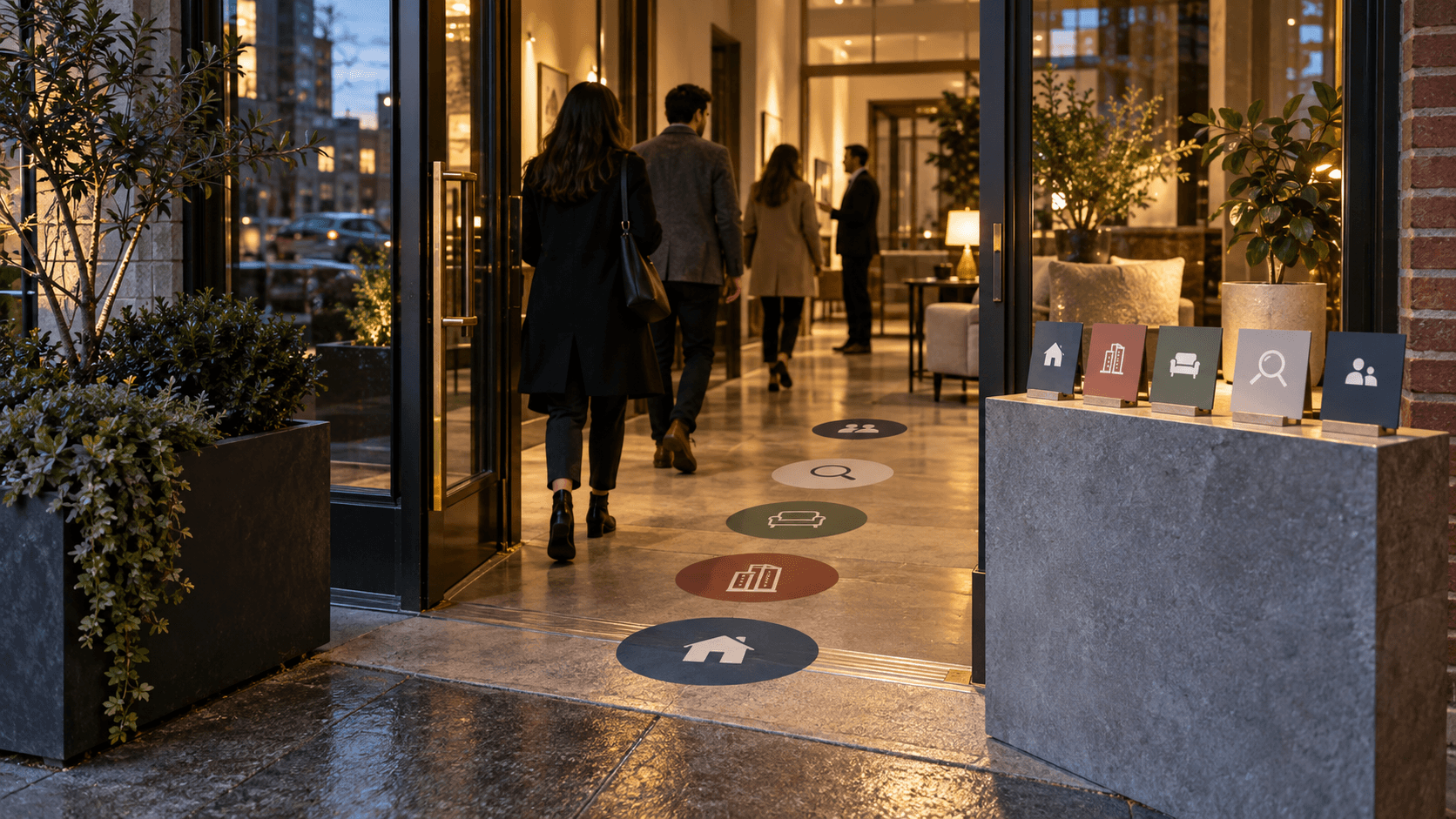
Real estate marketing often shows attractive fragments. Stronger property materials create a sequence from curb to lobby, unit, detail, follow-up, and decision.
In this article
- 01The tour begins before the unit
- 02Galleries need a walking order
- 03Print can hold the route
- 04Sequence is not a promise of outcome
The tour begins before the unit
A buyer does not experience a property as a folder of beautiful rooms. They arrive from the street, look for the entrance, notice the lobby, ride the elevator, step into the unit, register the light, inspect the detail, and later try to remember which place felt coherent. Marketing that only shows the prettiest fragments asks memory to do too much work.
A better property system treats the tour as a sequence. The curb, lobby, plan, room, material detail, neighborhood cue, and follow-up are connected. The buyer is not merely shown a place. They are helped through it.
Galleries need a walking order
Listing galleries often begin with a hero image and then drift into whatever photographs look strongest. That may be visually appealing, but it can blur the buyer's mental map. A sequence-led gallery answers the same questions a walk-through answers: where do I arrive, what is the first impression, how does the plan work, what details matter, and what should I remember later?
This is not a call for dull documentation. It is a call for editorial order. The strongest image can still lead, but the rest should help the buyer build confidence instead of making them shuffle a deck of attractive pieces.
- Create a curb-to-detail image order before editing the gallery.
- Pair open-house cards with the same sequence used online.
- Use follow-up emails to return to the memorable details, not to repeat the entire listing.
- Keep print pieces, digital galleries, and social crops aligned around the same buyer path.
Print can hold the route
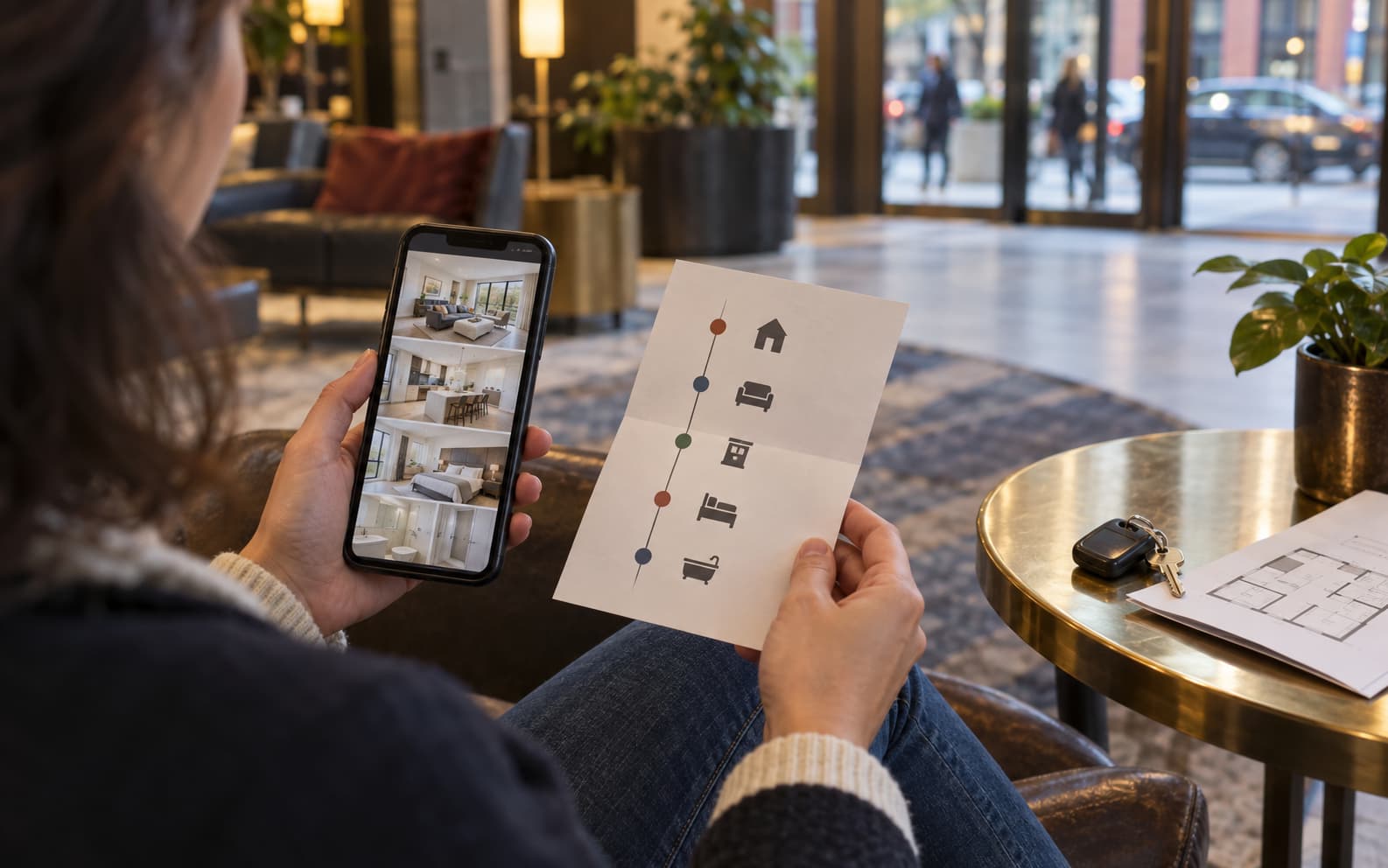
In a fast NY/NJ open house, a small printed piece can do something a phone gallery cannot. It can sit in the buyer's hand while they move through the space. It can mark the order of the tour, point out a material detail, connect a floor-plan moment to a room, and make the follow-up feel less generic.
The mistake is treating print as a souvenir after the digital work is done. Print can be the route map. Digital can be the expansion. The follow-up can be the memory aid. Each piece should know its role.
Sequence is not a promise of outcome
Good marketing cannot promise a faster sale, a higher offer, or a stronger buyer response. It can only make the property easier to understand and remember. That restraint matters. Real estate materials should be persuasive without pretending that design controls the market.
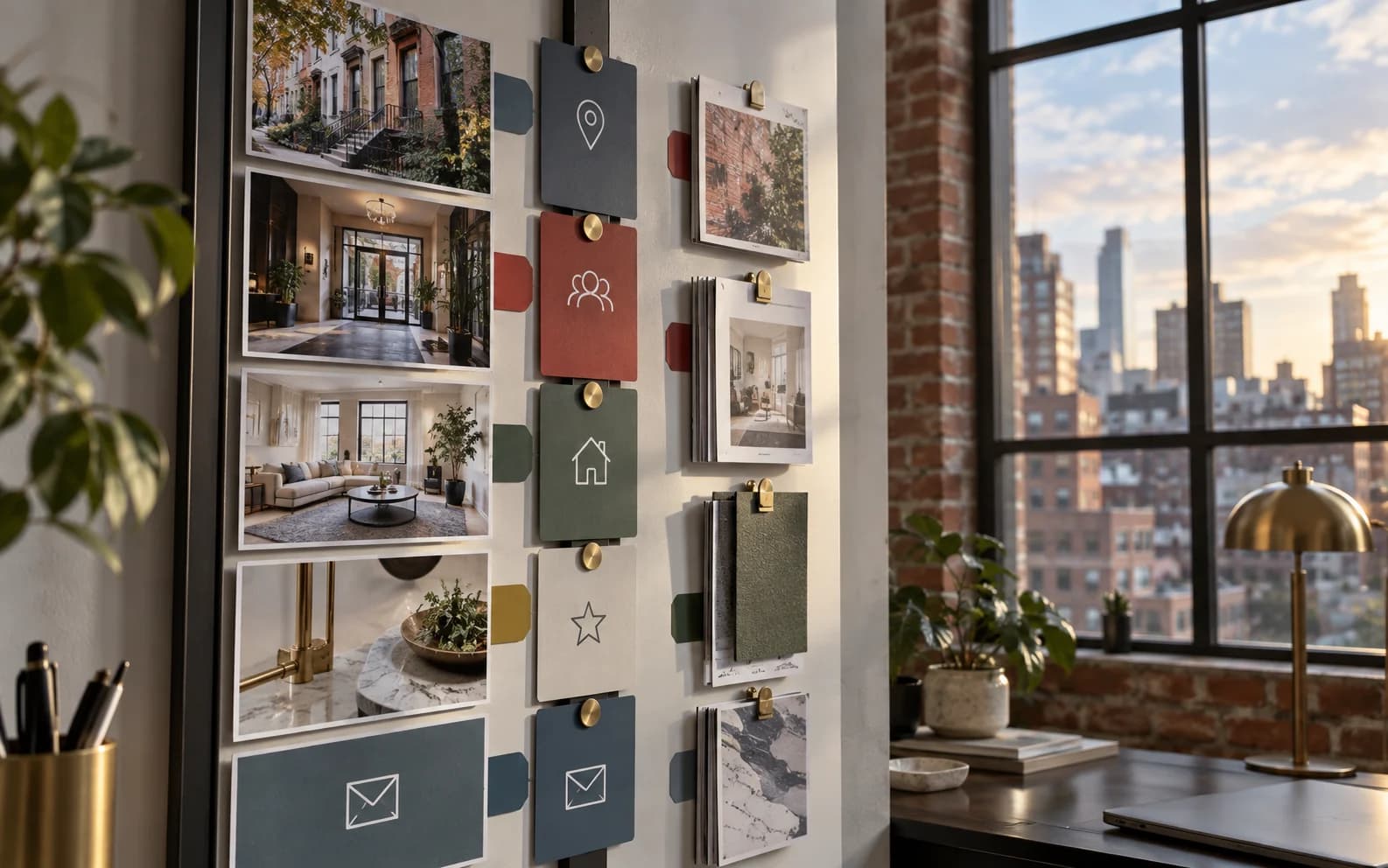
A practical audit starts after the tour. Put the listing gallery, print piece, route card, social post, and follow-up email side by side. Do they tell the same story in the same order? Or does each channel restart the property from a different angle?
Frequently asked questions
What does sequence mean in property marketing?
Sequence means arranging images, open-house print, route cards, and follow-up materials in the order a buyer experiences and remembers the property.
Why does print still matter for open houses?
Print can guide the buyer during the physical tour, mark key details, and give the follow-up a concrete structure after the visit.
Should real estate marketing always begin with the best photo?
The strongest image may lead, but the rest of the set should help buyers understand arrival, plan, rooms, details, and follow-up rather than only showing attractive fragments.
Need stronger production support?
Turn the design system into vendor-ready files that actually ship well.
We help organize brochures, decks, flyers, menus, and other customer-facing materials so they stay consistent from layout through production handoff.
Review the asset system