

Article · Nov 6, 2026
Pickup Is Part of the Store
For a NY/NJ retailer, the order counter and curbside handoff are part of the store customers remember.
8 min read
A pickup handoff can be fast without feeling improvised. A few practical design decisions turn the threshold into a clear extension of the shop.
In this article
- 01The bag crosses the same threshold as the customer
- 02Make the promise before the customer arrives
- 03Organize the object, not just the message
- 04Let the fast exit remember the room
The bag crosses the same threshold as the customer
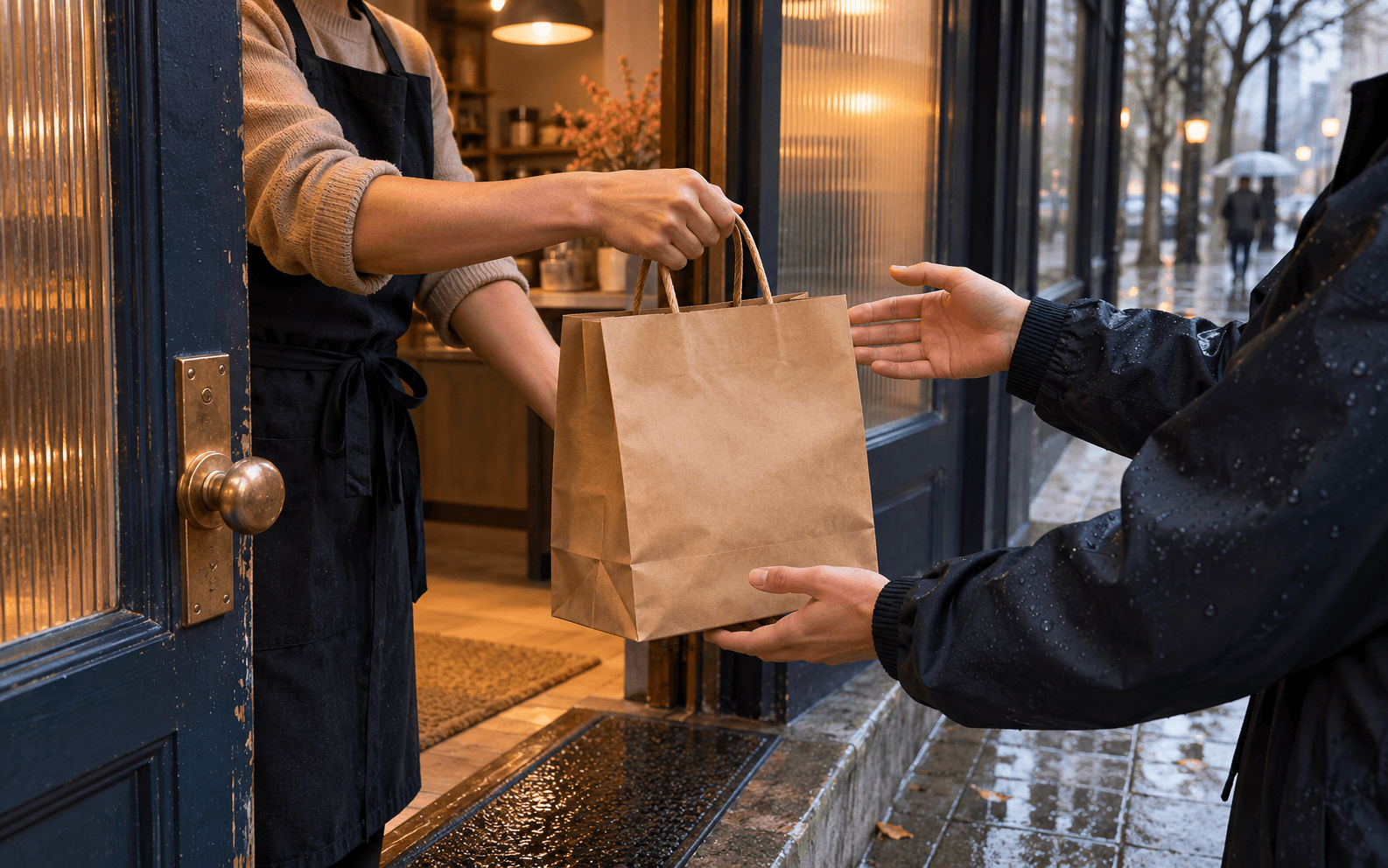
At blue hour, a neighborhood shop can look settled from the sidewalk: warm light, a door opening, a small shelf of orders waiting just inside. For the person who placed an order between meetings or school pickup, that shelf is not a footnote. It is the store. It tells them where to stand, whether the order is ready, and whether someone thought through the final two minutes.
Retailers often treat pickup as a purely operational layer added after the brand work is done. The result can be an excellent storefront followed by a handwritten note, an uncertain line, and a customer who has to ask three people what to do. Speed matters, especially in NY/NJ streets and schedules. But speed becomes more pleasant when the route is visible before the customer reaches the door.
Make the promise before the customer arrives
A useful pickup experience starts in the confirmation, not at the shelf. Is the order ready or being prepared? Which entrance should the customer use? What name or number will identify it? Is there a pickup window, parking guidance, or a way to ask for help? These details are ordinary, which is exactly why they carry such weight. Customers notice ordinary friction before they notice a clever campaign line.
The language and facts should agree with the website, local profile, staff script, and any printed cue by the door. If the shop cannot promise a specific time, it should not hint at one. If pickup changes during a holiday, the update needs a clear home. Honesty here is not a legalistic gesture; it is the basis for a handoff that feels considered rather than defensive.
Organize the object, not just the message
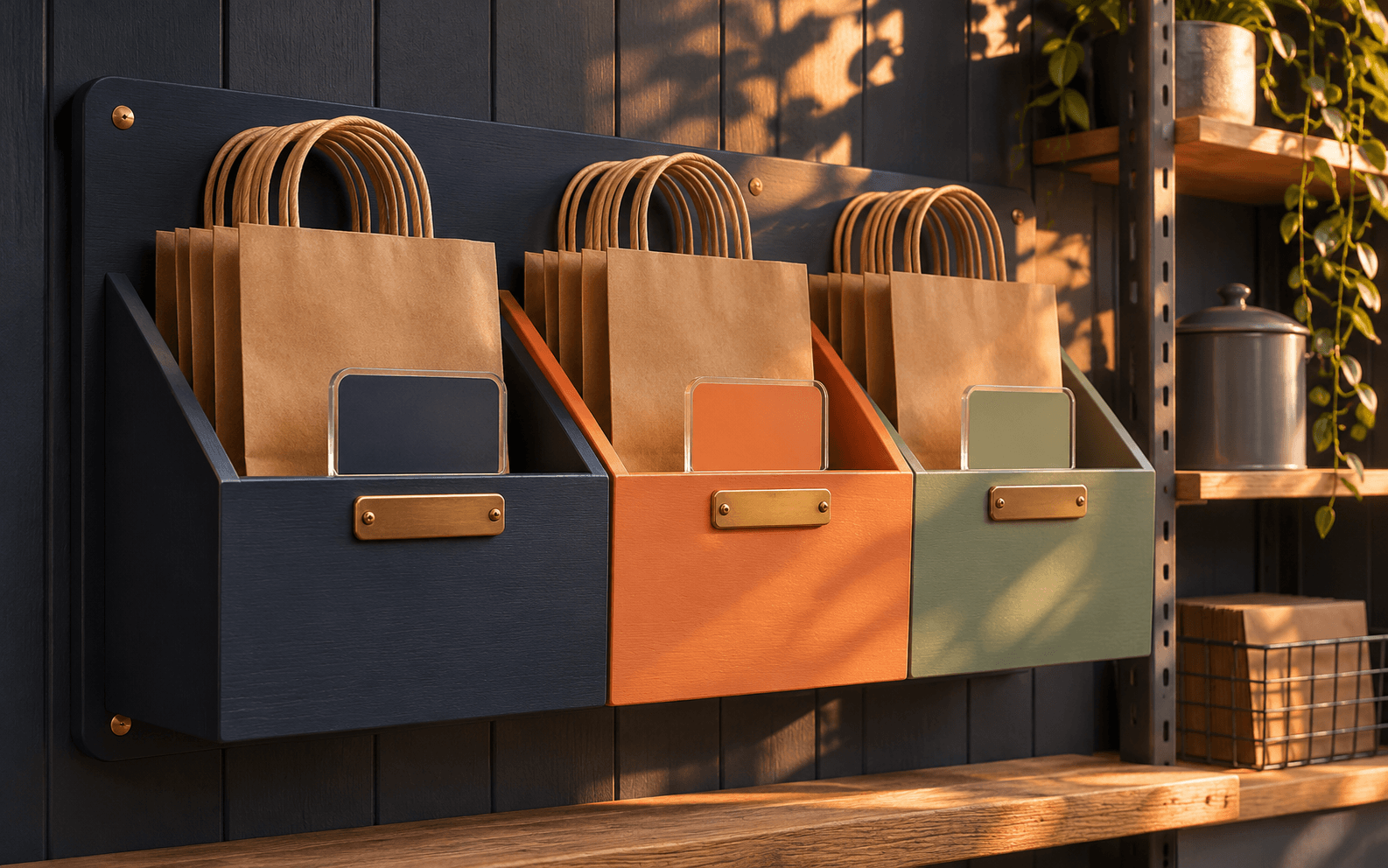
A bag, label, shelf, card, and door can do a surprising amount of wayfinding. The goal is not to turn a small shop into an airport. It is to give each object one unambiguous job. The confirmation identifies the order. The threshold confirms the right place. The shelf separates ready items from working items. A staff member can see a customer approaching without making them feel like they have interrupted something.
This is where production choices matter. A reusable card format, durable label area, sensible shelf dimensions, and approved color or type cues are more useful than a one-off seasonal sign. They can move with the shop’s real rhythms: rain, rush hour, a short-staffed afternoon, a holiday weekend. Design gets less decorative and more helpful when it accepts the conditions of retail.
- Write the pickup route in the order confirmation before designing a sign.
- Use one consistent way to identify ready orders without exposing unnecessary customer information.
- Give the door, shelf, and staff script distinct jobs.
- Review holiday and weather changes as operating updates, not last-minute graphic emergencies.
Let the fast exit remember the room
The pickup customer may never browse the full store that day. They may arrive with a stroller, a delivery deadline, a train to catch, or rain on their coat. That does not make them a lesser customer. It makes the last few feet of the journey a particularly honest test of the business’s point of view.
A clear handoff will not replace good merchandise or kind service. It can, however, keep a small operational moment from undoing them. When the threshold, confirmation, physical materials, and staff response speak in the same plain language, the customer leaves carrying more than a bag. They leave with the sense that the store knew they were coming.
Frequently asked questions
What should a retail pickup confirmation include?
State whether the order is ready, where and when to collect it, how it will be identified, and a practical way to ask for help. Keep those facts current across customer-facing channels.
How can a small retailer organize pickup without a major remodel?
Start with a clear route, a consistent ready-order identifier, a defined shelf or counter zone, and a short staff handoff script. Durable reusable cues often matter more than elaborate fixtures.
Should pickup branding be different from the in-store experience?
It can be simpler and faster, but it should use the same accurate facts and recognizable visual system so the handoff feels like part of the same store.
Need a sharper customer-facing system?
Improve consistency across the brand, website, and sales materials.
Visual Square helps NY/NJ businesses clean up the touchpoints customers actually see first, so the brand feels clearer, more credible, and easier to trust.
Talk through the refresh