
Article · Aug 21, 2026
Open House Materials Should Not Feel Temporary
How NY/NJ real estate teams can make open-house signs, property sheets, digital listings, and follow-up assets feel like one reliable property story.
8 min read
Open-house materials do more than decorate a listing day. They guide arrival, frame the property, support the agent's conversation, and keep the story coherent after buyers leave.
In this article
- 01The open house starts before the foyer
- 02Prepared does not mean overdesigned
- 03The property sheet is a conversation tool
- 04Digital and print should correct each other
- 05Design for the next listing while serving this one
The open house starts before the foyer
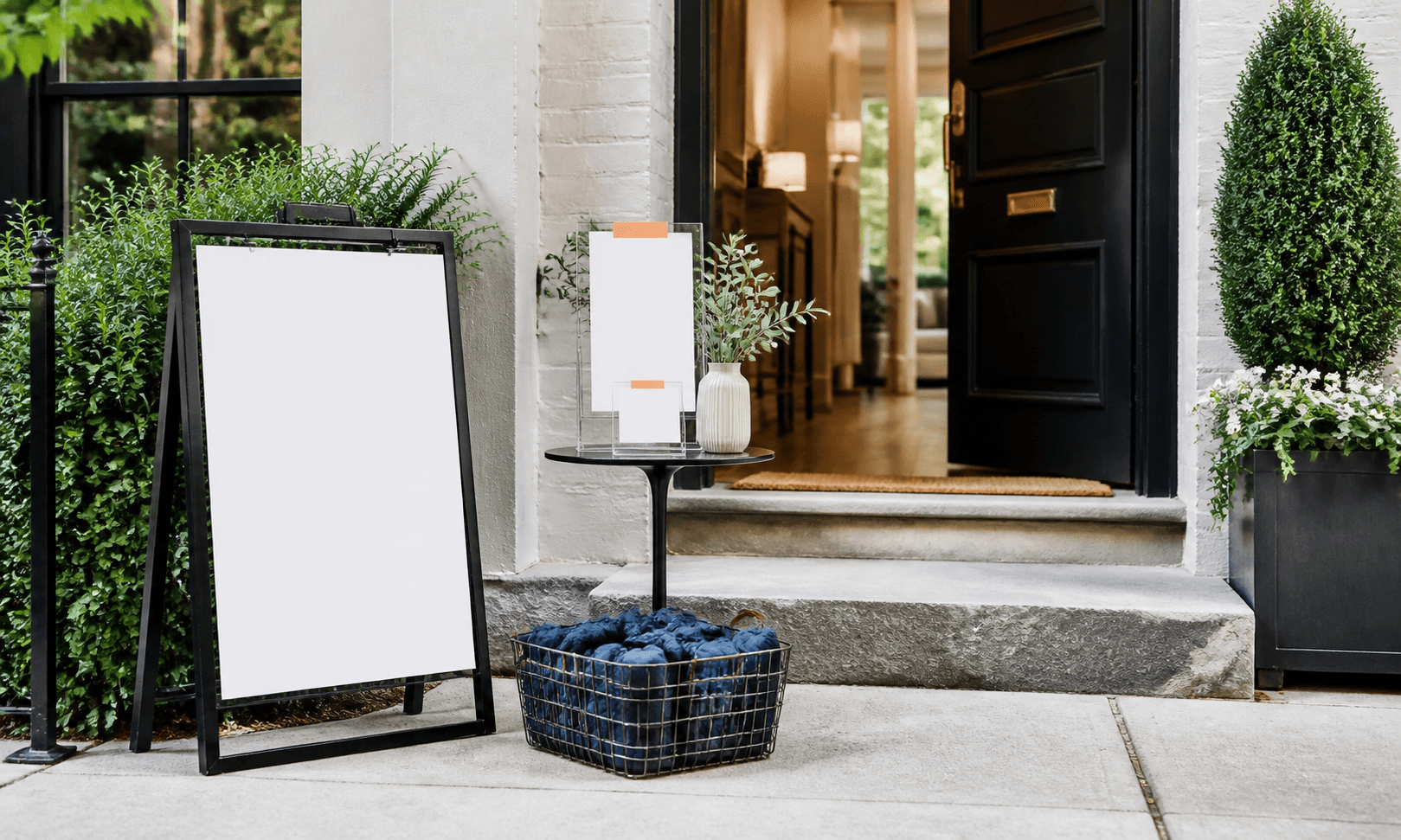
An open house begins earlier than the agent's greeting. It begins at the curb, with a sign that has to be seen from a moving car or a half-distracted walk. It continues at the threshold, where a buyer looks for confirmation that they are in the right place and that the property has been handled with care.
Temporary materials are unavoidable in real estate. Directional signs, riders, property sheets, QR handoffs, and follow-up pieces all have short lives. The mistake is letting them feel temporary. A buyer may not consciously judge the paper weight or sign holder. They will notice whether the experience feels assembled at the last minute.
Prepared does not mean overdesigned
Real estate marketing can easily drift into gloss. Every surface becomes dramatic, every photo gets heroic, and every sheet tries to look like a luxury brochure. That may fit some properties. For many NY/NJ listings, the stronger move is calmer: make the facts easy to compare, the route easy to follow, and the materials sturdy enough to feel intentional.
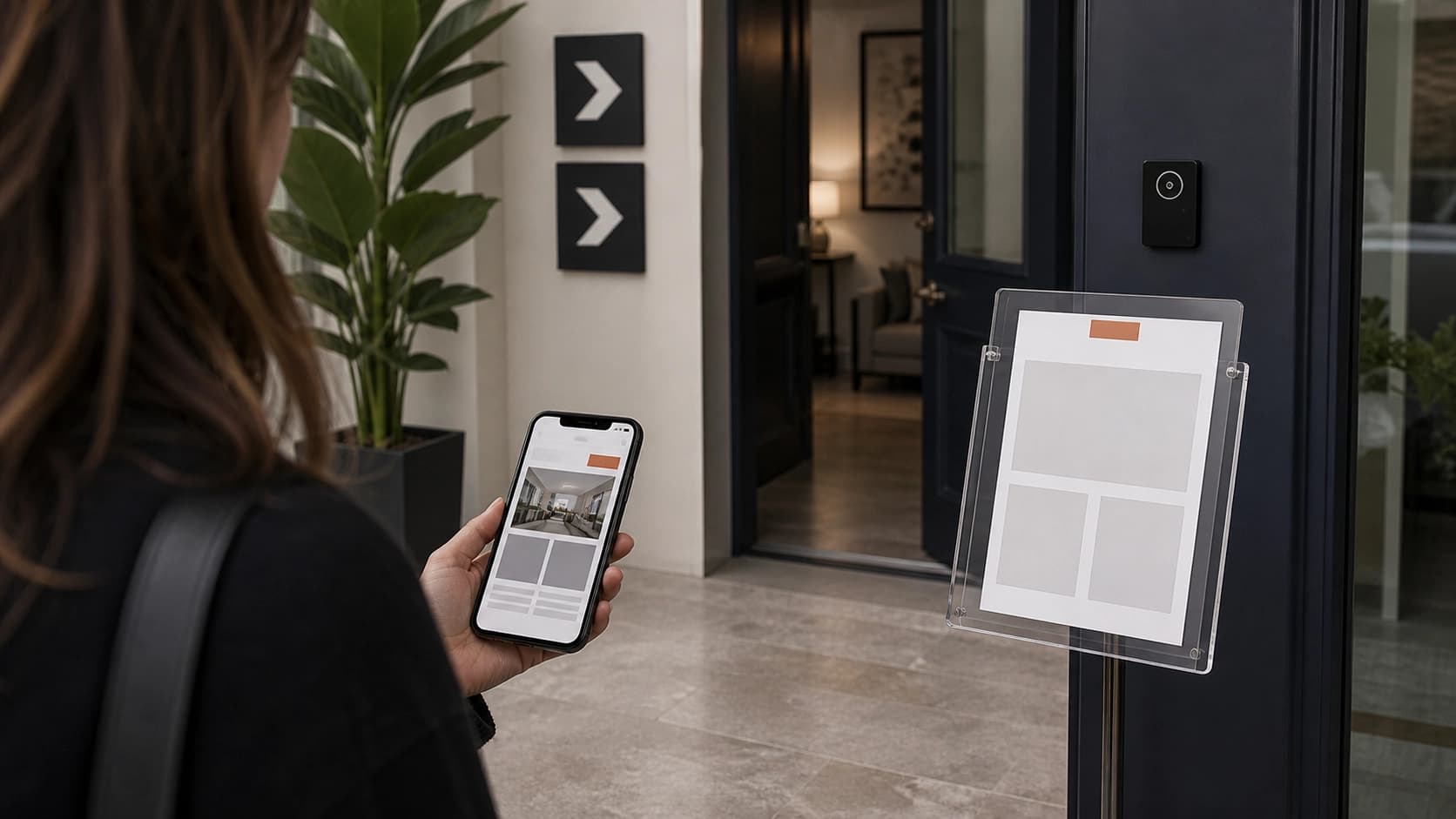
The buyer needs orientation. Which entrance is open? Is there a sign-in step? Where are the key rooms? Which details matter after the visit? How does the printed sheet relate to the digital listing? Prepared materials answer those questions without smothering the property in decoration.
- Use one hierarchy for online listing, printed sheet, sign-in card, and follow-up email.
- Make directional signs legible before making them clever.
- Keep property facts, image crops, and room labels consistent across channels.
- Save reusable templates so speed does not create a different brand each weekend.
The property sheet is a conversation tool
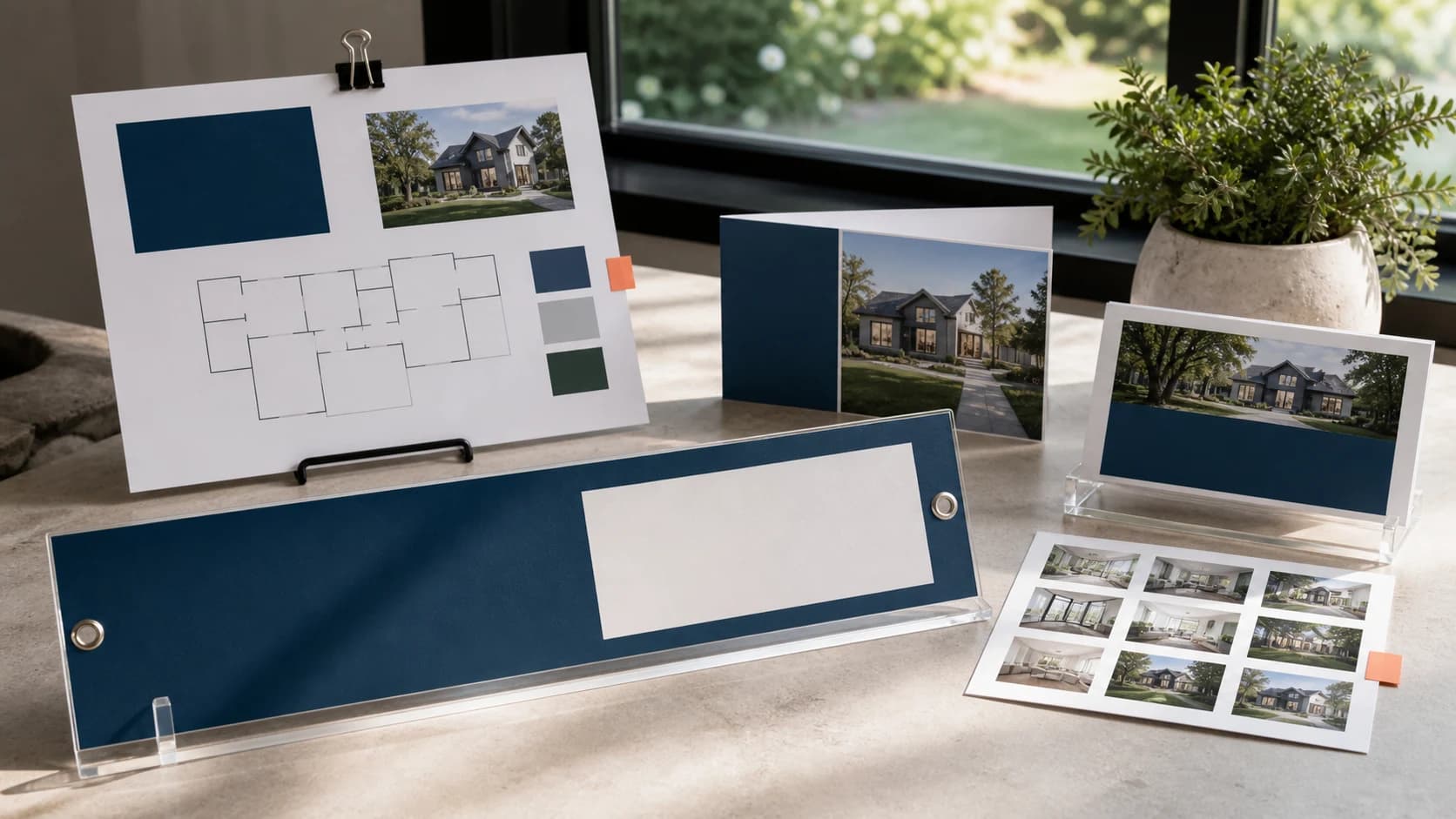
A property sheet is not only a takeaway. During the visit, it gives the buyer a way to listen. It can carry the floor plan, main facts, neighborhood notes, improvement context, and next step without forcing the agent to repeat every detail.
That requires discipline. If the sheet is crowded with decorative claims, it becomes hard to use. If it is too bare, it cannot support memory after the buyer leaves. The useful middle is a sheet that tells the same story as the listing page, but in the order a person uses while walking through a home.
Digital and print should correct each other
Google Business Profile and Search guidance both point toward current, useful, people-first information. Real estate has its own platforms and rules, but the broader customer behavior is familiar: people move between search, listing pages, maps, messages, signs, printed sheets, and follow-up links.
When print and digital disagree, the buyer supplies the doubt. A room label changes. A feature disappears. The photo crop suggests one emphasis while the handout suggests another. A consistent material system does not guarantee a sale, and should not pretend to. It simply keeps preventable confusion from entering the room.
Design for the next listing while serving this one
The practical approach is to build a kit that can flex: sign templates, property sheet hierarchy, floor plan rules, photo crop standards, email follow-up, and archive-ready files. Then adapt the kit to the property, not the other way around.
On open-house day, the materials should not call attention to themselves. They should make the buyer feel that the visit has been considered. The sign at the curb, the sheet by the door, and the follow-up after the visit are all temporary objects. They do not have to feel disposable.
Frequently asked questions
What open-house marketing materials should real estate teams prepare?
Common materials include directional signs, sign-in cards, property sheets, floor plan pages, photo crops, digital listing assets, follow-up emails, postcards, and reusable production templates.
Why should open-house materials match the digital listing?
Buyers move between online research and in-person visits. Matching hierarchy, facts, imagery, and next steps keeps the property story clear.
Can open-house materials be reusable without feeling generic?
Yes. Reuse the structure, hierarchy, production specs, and file organization while adapting photography, facts, neighborhood context, and emphasis to each property.
Need stronger production support?
Turn the design system into vendor-ready files that actually ship well.
We help organize brochures, decks, flyers, menus, and other customer-facing materials so they stay consistent from layout through production handoff.
Review the asset system