
Article · Aug 11, 2026
A Menu Is a System Before It Is a PDF
Why restaurant and cafe menus should be designed as a working brand system across boards, print, packaging, web, and ordering moments.
8 min read
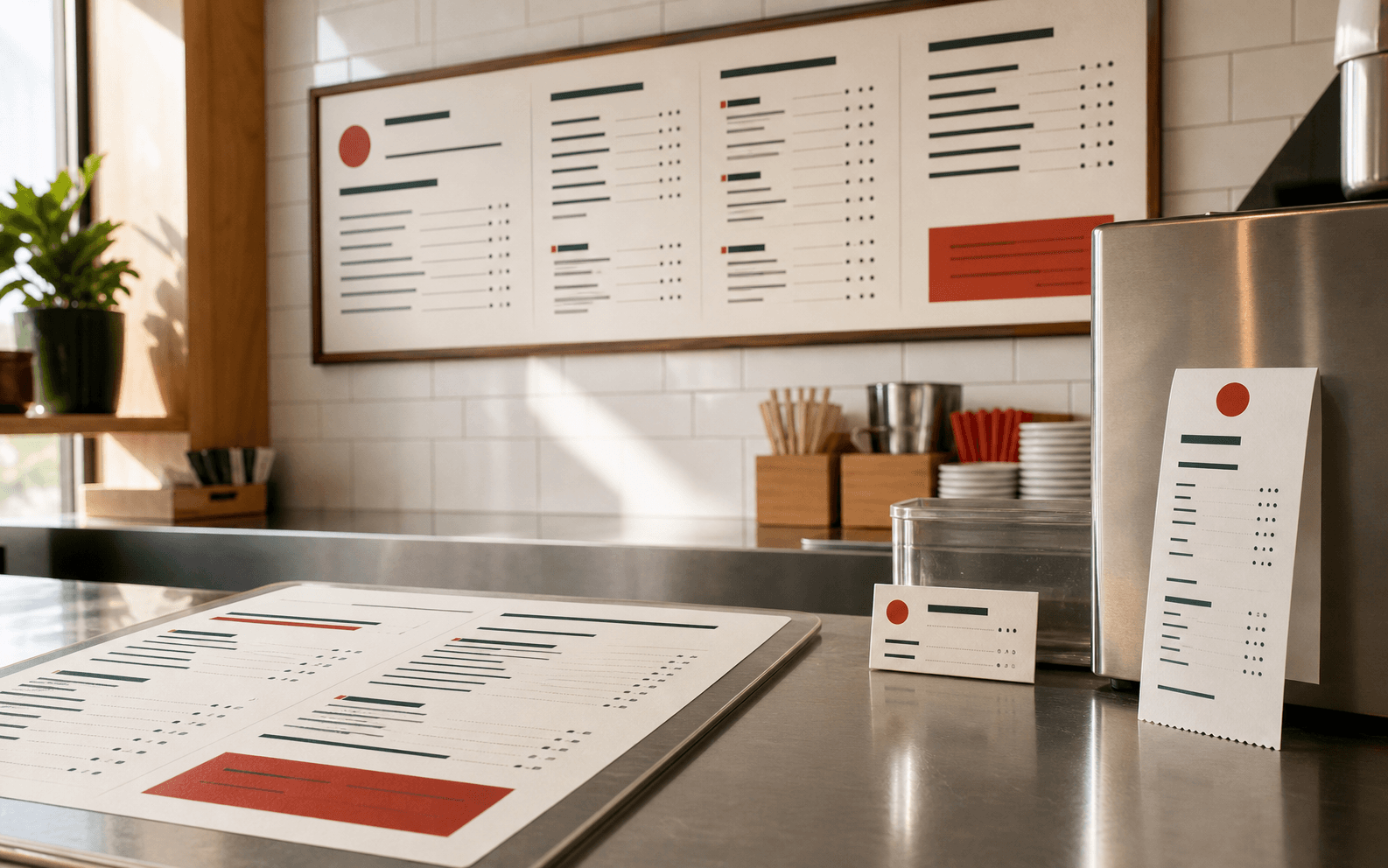
A restaurant menu has to work across the counter, wall board, website, packaging, and staff updates. Treating it as a system prevents the brand from falling apart at the exact moment a customer decides.
In this article
- 01The menu is where the brand has to behave
- 02A PDF menu is usually too late
- 03Production rules are part of the taste
- 04The menu system should travel into packaging
- 05Start with the next change, not the grand opening
The menu is where the brand has to behave
A customer rarely studies a restaurant identity in the order its designer intended. They meet a sign first, then a menu board, then a printed sheet, then a pickup label or receipt. By the time the logo has made its polite appearance, the menu has already done most of the talking.
That is why a menu should not be treated as the last PDF before opening. It is the place where appetite, price, pace, and trust all have to fit on one surface. If the menu hierarchy is weak, the brand may look charming and still make ordering feel like a small errand.
A PDF menu is usually too late
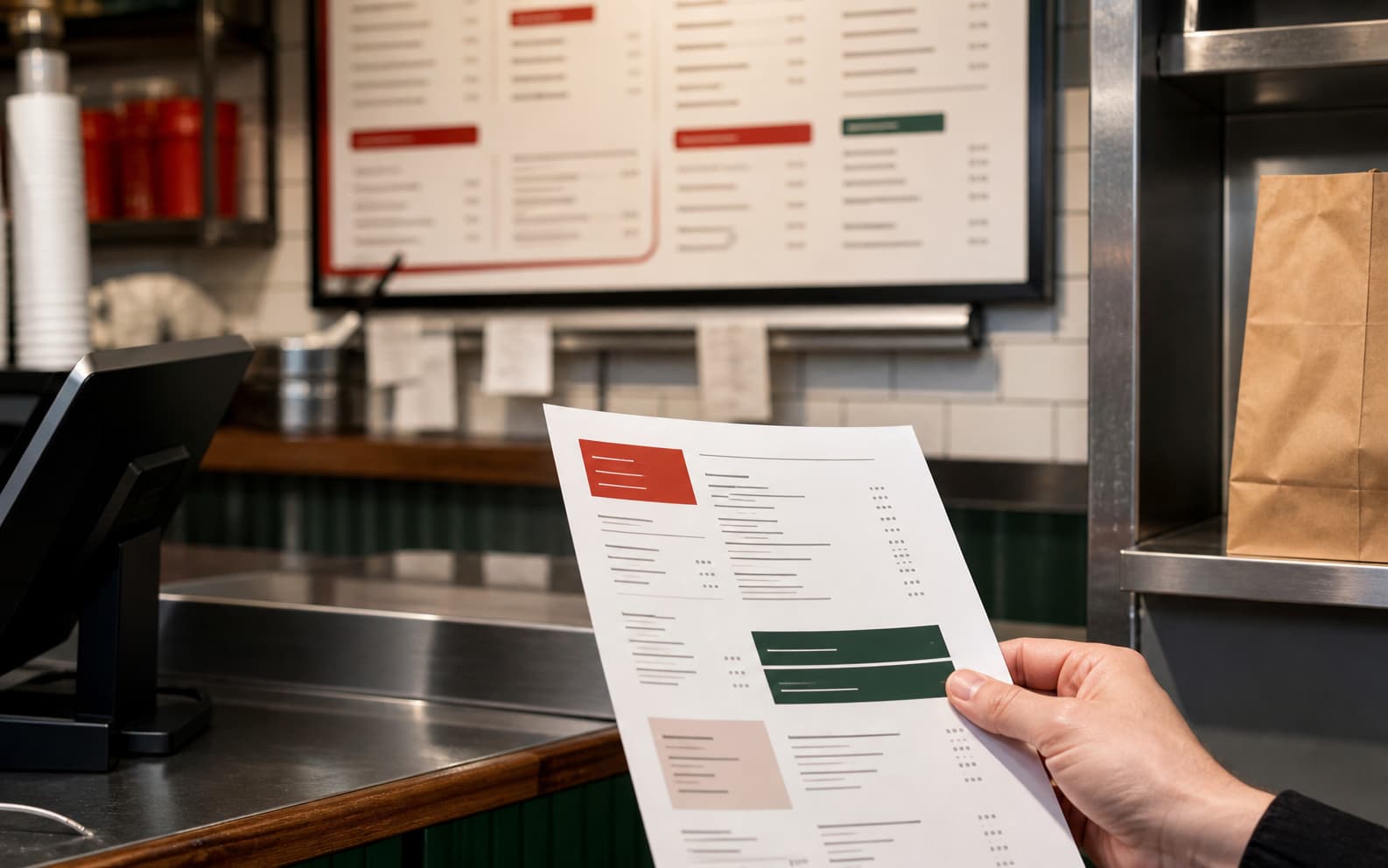
Restaurants often discover menu problems after the food, price, and opening schedule are already fixed. The board does not match the printed version. The website categories use different names. The takeout label carries a leftover type style. The catering sheet sounds like another business.
The better sequence starts earlier. Before production, decide the menu grammar: how categories are named, how specials interrupt the grid, how prices align, how dietary notes appear, how photography is used, and which parts can change without breaking the whole piece.
- Choose a category rhythm that works on wall boards, web pages, and printed sheets.
- Design price and modifier rules before the first export.
- Keep specials visually flexible without making them look temporary or careless.
- Write item descriptions in a voice that can survive updates.
Production rules are part of the taste
Print decisions can seem dull next to naming and photography, but they shape how the restaurant feels in a customer's hand. Paper weight, lamination, trim size, light reflection, margin, and cleanup rules all affect whether the menu reads as considered or improvised.
The same is true on screen. A web menu that uses tiny image-only text may look close to the printed piece and still fail the person trying to order on a phone. Google guidance continues to favor useful, people-first content, and that principle applies here in plain terms: a menu should be readable as information, not only viewed as a picture.
The menu system should travel into packaging
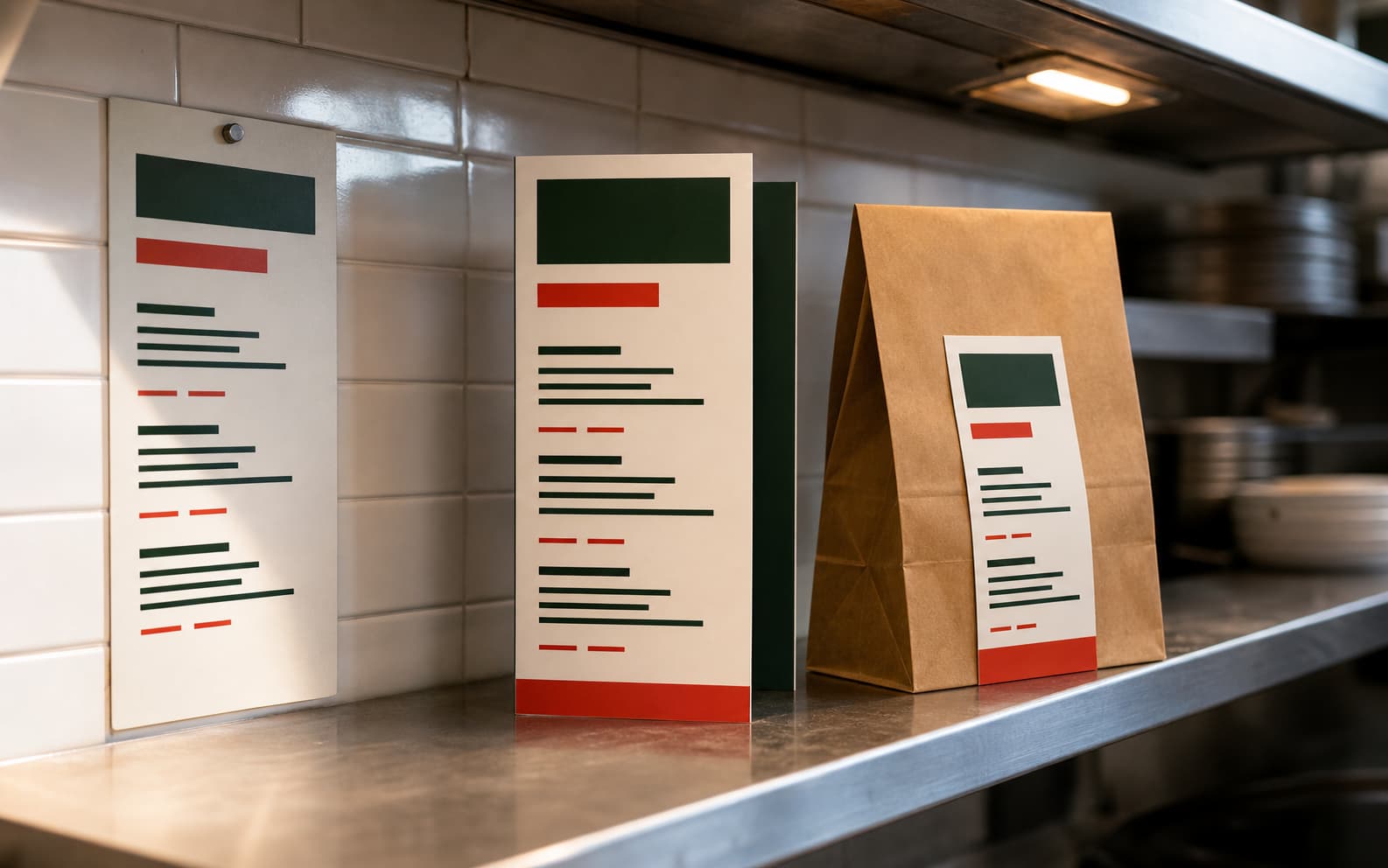
For cafes, bakeries, quick-service restaurants, and neighborhood food brands, packaging is often the second menu. A cup label, pastry box sticker, catering insert, loyalty card, or takeout bag reminds the customer what kind of place they chose.
Those pieces should not borrow random decoration from the identity file. They should extend the menu's hierarchy: the same naming logic, the same restraint around claims, the same practical spacing, and the same production discipline. That is how a small restaurant starts to feel bigger than one countertop.
Start with the next change, not the grand opening
The real test of a menu system is not whether it photographs well on launch week. It is whether the team can add a seasonal drink, remove an item, change a price, introduce catering, or print a smaller takeout version without starting over.
A good restaurant menu returns to the customer with less friction each time. The board is easier to scan. The printed sheet feels current. The label belongs to the same voice. The PDF, if there is one, becomes only one export from a working system rather than the place where the brand quietly runs out of room.
Frequently asked questions
Why should a restaurant menu be designed as a system?
Because the same menu logic has to work across wall boards, printed menus, websites, takeout labels, catering sheets, and seasonal updates.
What should a restaurant decide before designing the final menu?
Decide category hierarchy, item naming, price rhythm, modifier rules, special placement, print specs, web readability, and packaging extensions.
Does menu design affect restaurant branding?
Yes. Customers spend more time with the menu than with the logo, so menu structure, tone, spacing, and production quality strongly shape the brand experience.
Need a sharper customer-facing system?
Improve consistency across the brand, website, and sales materials.
Visual Square helps NY/NJ businesses clean up the touchpoints customers actually see first, so the brand feels clearer, more credible, and easier to trust.
Talk through the refresh