

Article · Oct 9, 2026
The Intake Form Carries the Brand
Med spa marketing becomes more credible when inquiry pages, intake materials, consultation language, and aftercare cards set expectations with care.
7 min read
A med spa brand is tested in the quiet handoff from inquiry to intake to aftercare. The strongest materials feel calm, specific, and restrained about claims.
In this article
- 01The brand enters before the treatment room
- 02Claims are design decisions
- 03The quiet pieces should match
- 04Restraint can feel premium
The brand enters before the treatment room
A med spa client may first notice the brand in a soft place: a service page, a confirmation email, a quiet intake form, a chair outside the treatment room. This is not the dramatic part of the experience. It is the part where the business either lowers the client's uncertainty or asks polish to do too much work.
Luxury language can be easy to write. Responsible expectation-setting is harder. The intake moment has to make a promise the business can actually keep: here is how consultation works, here is what we need to know, here is what we can and cannot claim, here is what happens after you leave.
Claims are design decisions
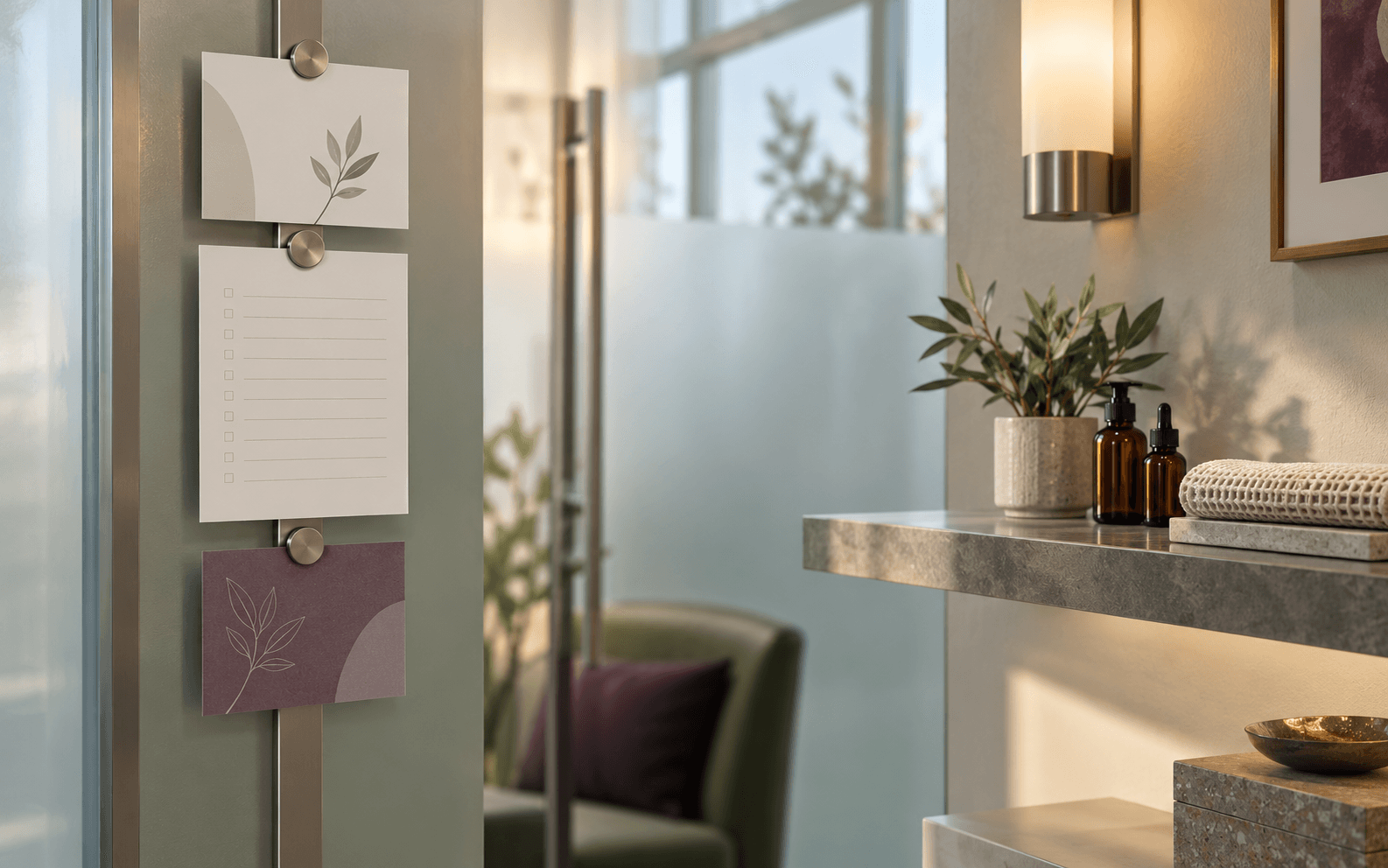
A claim is not only a sentence in an ad. It can be implied by a before-and-after crop, a headline near a treatment photo, a promise in a social caption, or a consultation card that lets the reader assume certainty where there is only possibility. FTC health-products guidance is written broadly around truthful, not misleading, substantiated claims. For a med spa, that principle should influence design as much as copy.
The responsible brand does not become dull. It becomes more precise. It can explain consultation, preparation, comfort, provider credentials, aftercare, and realistic next steps without turning every surface into a promise of transformation.
- Separate service education from outcome promises.
- Keep consultation language close to the point where customers make decisions.
- Avoid visual pairings that imply guaranteed results the business cannot substantiate.
- Make aftercare and follow-up materials feel like part of the same brand, not paperwork from another office.
The quiet pieces should match
The website may be elegant and the room may be beautiful, but the customer still reads the intake form. If that form feels generic, dense, or unrelated to the service page, the brand loses a little confidence at exactly the wrong time. The same is true of aftercare cards, appointment reminders, and consultation notes.
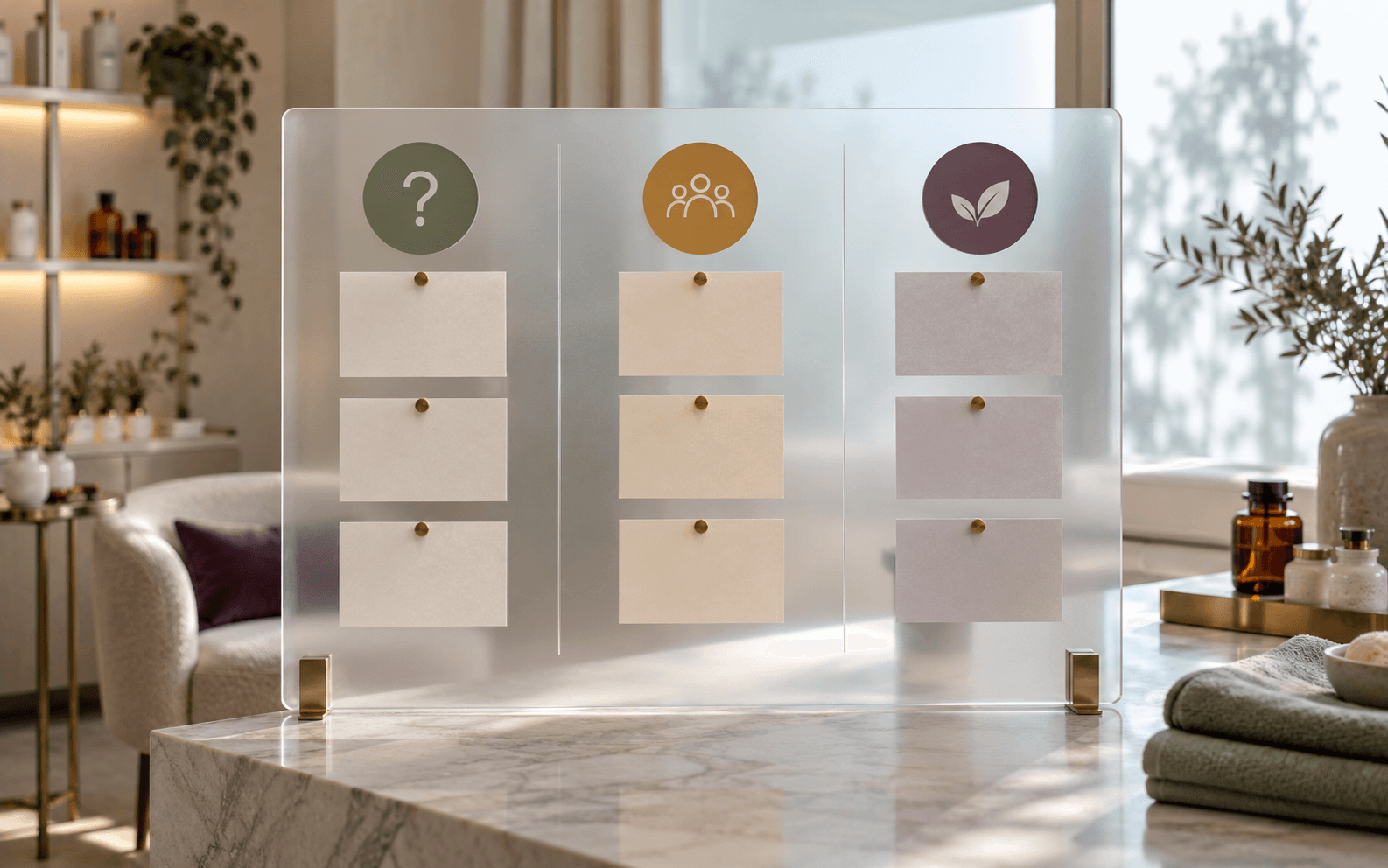
A useful med spa system lets each piece carry a different weight. The service page introduces the offer. The intake form gathers context. The consultation material clarifies fit. The aftercare card extends care after the appointment. They do not need to say the same thing, but they should sound like the same business.
Restraint can feel premium
Many med spa brands reach for softness: pale colors, smooth gradients, serene faces, spacious type. Those choices are not wrong. They are simply incomplete if the customer still has to decode service scope, preparation, timing, safety language, and follow-up alone.
Restraint is not the opposite of premium. It is often what makes premium believable. A brand that states what it knows, avoids what it cannot support, and carries the client through the quiet paperwork has more authority than one that asks a pretty room to answer every question.
Frequently asked questions
Why does intake design matter for a med spa brand?
Intake materials shape trust at a sensitive point in the customer journey. They should clarify consultation, preparation, expectations, and aftercare in the same voice as the website and service materials.
Should med spa marketing avoid all results language?
No, but results language and visuals should be truthful, not misleading, and supported. Avoid implying guaranteed outcomes where the business cannot substantiate them.
What materials should connect with the med spa website?
Connect service pages, inquiry forms, booking confirmations, intake forms, consultation sheets, aftercare cards, and follow-up messages so the brand feels consistent before and after the appointment.
Need a sharper customer-facing system?
Improve consistency across the brand, website, and sales materials.
Visual Square helps NY/NJ businesses clean up the touchpoints customers actually see first, so the brand feels clearer, more credible, and easier to trust.
Talk through the refresh