
Article · May 29, 2026
Logo vs Brand Identity: What NY/NJ Small Businesses Actually Need
A practical explanation of the difference between a logo and a brand identity for local businesses preparing to launch or refresh.
7 min read
A logo identifies the business, but a brand identity makes every customer-facing asset feel connected.
In this article
- 01The logo is only one part
- 02What a useful identity kit includes
- 03Why the confusion happens
- 04What most small businesses actually need
The logo is only one part
A logo helps people recognize the business. A brand identity is what makes the business feel coherent once the logo has to live on a website, a business card, a flyer, a menu, a proposal, a brochure, and a social profile.
That difference matters most during launch and early growth. Many NY/NJ small businesses think they are buying a brand when they are really only buying a mark. Then every next asset has to be decided from scratch, which slows production and creates inconsistency.
What a useful identity kit includes
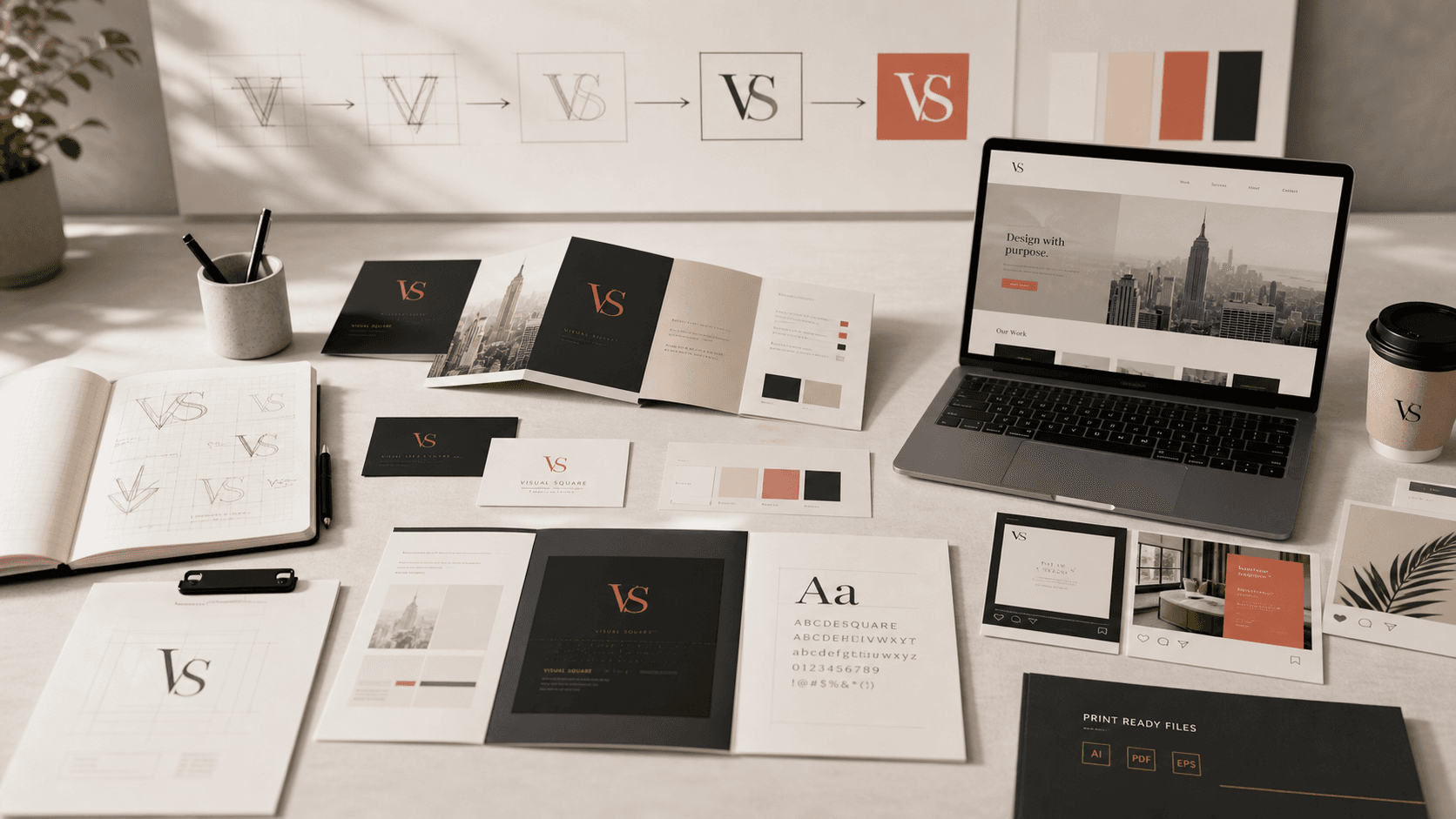
Most local businesses do not need a giant brand book. They do need logo variations, a working color palette, typography choices, spacing guidance, image direction, social profile assets, print-ready files, and a few templates for the materials they use most often.
The right kit depends on the business type. A restaurant may need menu and packaging direction. A med spa may need booking and treatment page structure. A professional services firm may need a one-pager, deck, website system, and document styling. The goal is always the same: fewer ad hoc decisions later.
- Logo files for dark, light, horizontal, icon-only, and production use
- Typography and layout rules that keep pages and print materials consistent
- Color usage guidance for web, social, and print outputs
- Reusable templates for the assets the owner will update most often
Why the confusion happens
Design vendors and clients often use the word branding to mean very different things. One side may mean a logo package. The other may assume a complete launch system. If the scope is not defined clearly, the business ends up with a logo file but still has no structure for the website, sales collateral, or print production.
That is why a practical launch conversation should always include where the identity has to live next. If the owner is opening soon, the useful question is not 'Do you want branding?' but 'What materials need to look finished before the public sees them?'
What most small businesses actually need
For most local businesses, the minimum useful package is a compact identity system plus the first set of real customer-facing assets. That might mean the logo basics, the homepage direction, a service one-pager, a business card, social profile graphics, and production-ready files.
That combination is usually more valuable than a logo-only project because it makes the business look established immediately and prevents a second round of rushed cleanup work a few weeks later.
Frequently asked questions
Can a small business start with just a logo?
It can, but a focused identity kit usually prevents inconsistent materials and saves redesign time later.
What is the minimum useful brand package?
Logo files, color palette, typography, basic layout direction, and templates for the most-used digital and print assets.
Is a brand identity only for bigger companies?
No. Small businesses often benefit more because they have less margin for inconsistent first impressions and rushed redesign work.
Should identity work include print-ready files?
Yes, if the business will use cards, menus, brochures, signage pieces, packaging, or other physical materials. Production-ready files save time and reduce vendor errors.
Need a sharper customer-facing system?
Improve consistency across the brand, website, and sales materials.
Visual Square helps NY/NJ businesses clean up the touchpoints customers actually see first, so the brand feels clearer, more credible, and easier to trust.
Talk through the refresh