
Article · Nov 23, 2026
The Fold Decides What Stays
A printed piece has a reading order before anyone reads a word. Its fold decides what a customer meets first, discovers next, and carries away.
8 min read
A brochure is not a small website in paper form. Its fold is a sequence that can make a useful offer easier to enter, carry, and remember.
In this article
- 01A folded page is already telling time
- 02The cover has one modest job
- 03Map the paper like a walk
- 04The last panel is not leftovers
A folded page is already telling time
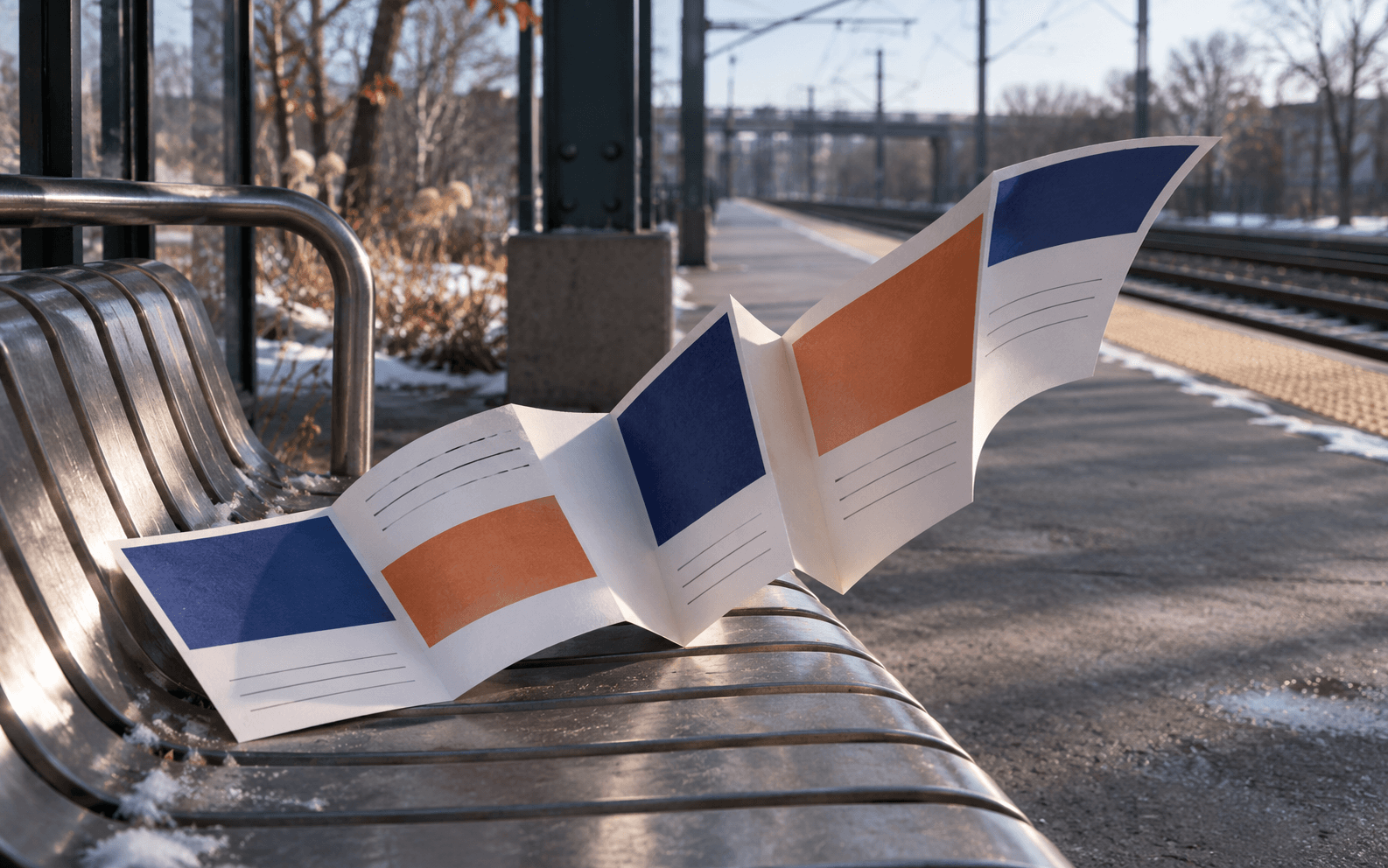
On a station bench, a brochure rarely opens with the ceremony it received on a conference-room table. Someone catches one edge while looking for a train, folds it back with a thumb, reads a panel out of order, then puts it in a pocket. The paper has only a few seconds to make its first panel worth turning. That is not a limitation imposed after the design. It is the design.
A folded piece carries an order before a reader reaches a sentence. One surface makes a promise; the next establishes the subject; an inside spread gives useful detail; the final panel lets the reader act later. When all those jobs have the same visual weight, the brochure becomes a polite pile of information. When they have a sequence, it behaves more like a short conversation.
The cover has one modest job
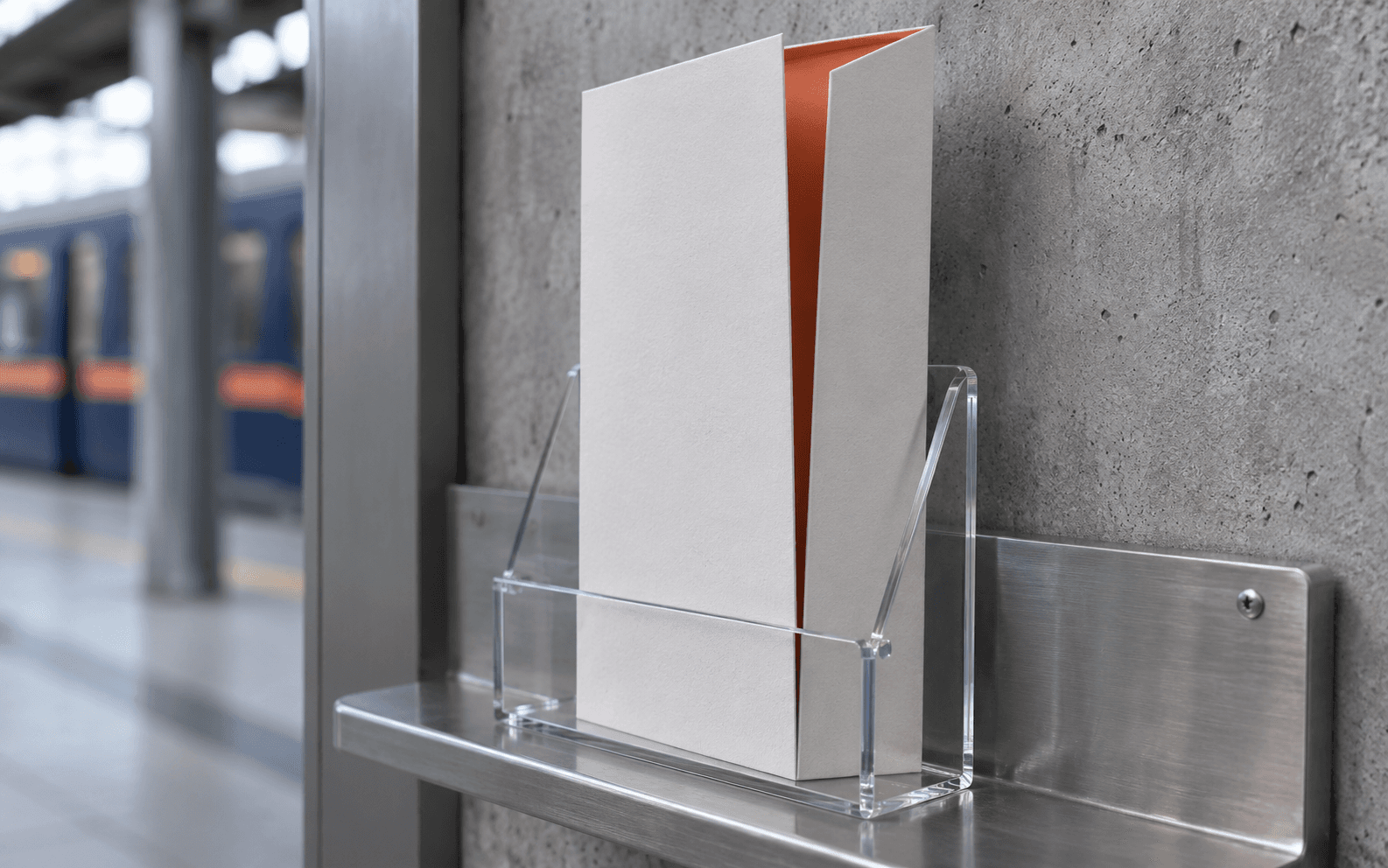
Owners often ask a cover to carry the name, the offer, the history, the testimonials, the phone number, and the whole family of visual ideas at once. Print has a cost, and empty space can look like money left on the table. But a cover that completes the sale before it is opened gives the reader no reason to open it. Its better job is smaller: establish recognition and name the question the inside will answer.
This is not an argument for cryptic minimalism. A neighborhood practice can say what it does. A restaurant can signal its occasion. A professional-services firm can state who it helps. The difference is between a first sentence and a legal brief. Give the reader enough orientation to decide whether the next panel is for them, then let the fuller proof and particulars have the space they need.
Map the paper like a walk
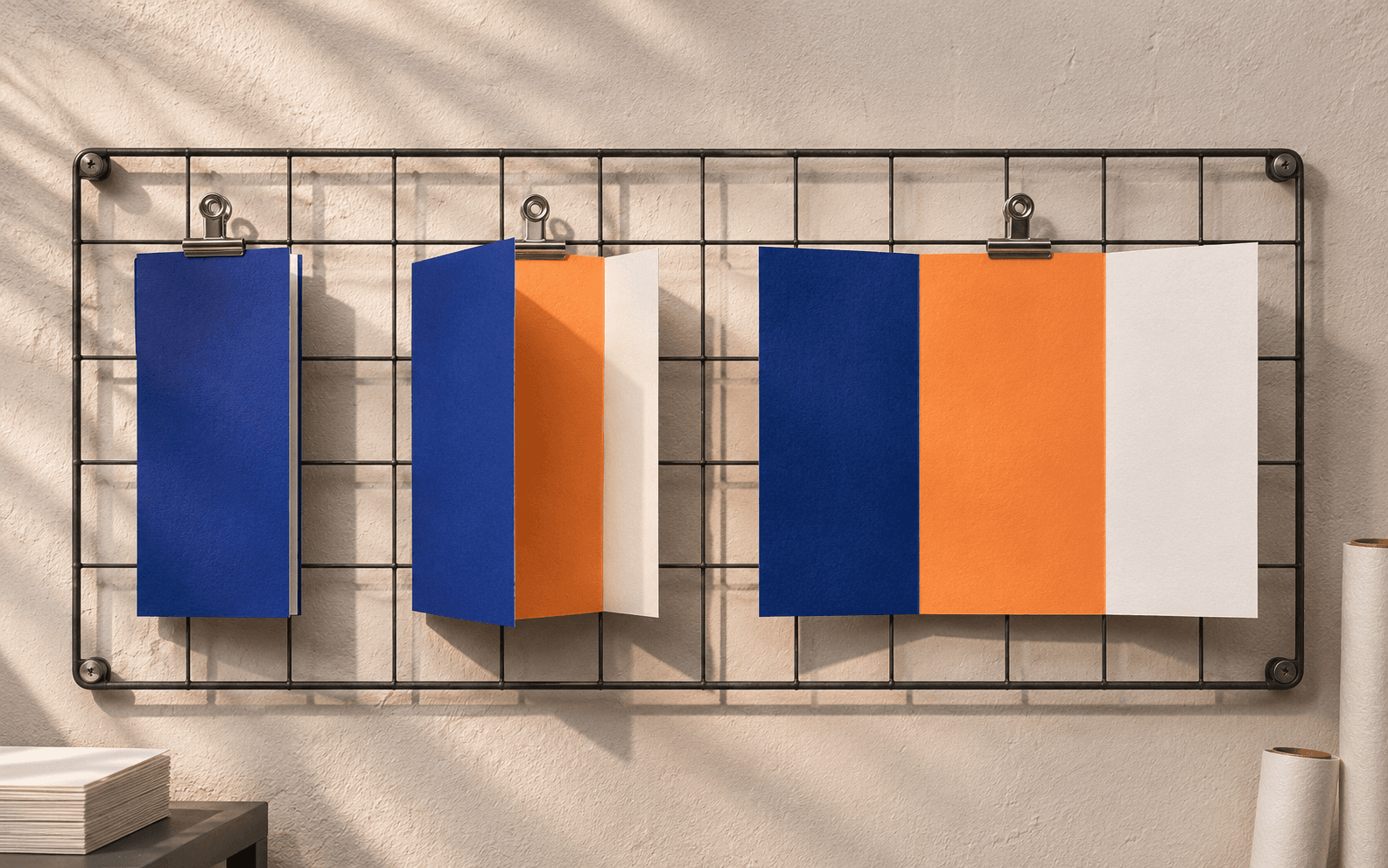
Before writing, lay the blank folded sheet out at its actual size and mark what can be seen when it is closed, opened once, opened fully, and turned over. Then assign one decision to each view. The closed view might establish the offer; the first opening can answer the practical question that makes it believable; the full spread can show services, a process, or a comparison; the reverse can carry location, preparation details, and a next step.
Fold a plain dummy and hand it to someone without explaining the intended reading order. If the appointment instruction appears before the reader knows why an appointment is useful, move it. If a beautiful inside spread hides the service that matters, change the sequence. Type, imagery, and color then reinforce the route instead of decorating every stop equally.
- Name the question the outside panel should make worth opening.
- Give the first opening the clearest useful answer.
- Keep location, timing, preparation, and contact details easy to find after folding.
- Check the finished piece standing up, in a hand, and at its actual counter.
The last panel is not leftovers
The back panel is often where everything late goes to live: a map, URL, icons, disclaimers, and phone numbers. Yet it is often the panel a person sees when the brochure is folded in a bag or set on a counter. Give it the practical fact a reader will need later, a truthful invitation, and enough room for both to be found without reopening the whole piece.
Visual Square treats this sequence as brand work because a brochure is one of the few brand objects a customer can literally carry away. The fold is not a production inconvenience to solve after copy is approved. It is the small hinge that decides what the reader encounters, remembers, and can do next.
Frequently asked questions
What should go on a brochure cover?
Establish recognition and state the offer or question worth opening. Save fuller proof and operational detail for the panels that follow.
How do you plan a folded brochure?
Start with a full-size blank dummy, mark the views a reader encounters, and give each view one clear reader job.
Need a sharper customer-facing system?
Improve consistency across the brand, website, and sales materials.
Visual Square helps NY/NJ businesses clean up the touchpoints customers actually see first, so the brand feels clearer, more credible, and easier to trust.
Talk through the refresh