
Article · Oct 16, 2026
Direct Mail Needs a Landing Path
Neighborhood postcards work harder when the printed piece, service page, profile update, and follow-up path are designed together.
8 min read
A postcard can still open a local conversation, but only if the digital path after the mailbox is as clear as the printed piece.
In this article
- 01The mailbox is only the first surface
- 02Distribution is not the same as direction
- 03The postcard should borrow hierarchy from the landing page
- 04Local print still needs production discipline
The mailbox is only the first surface
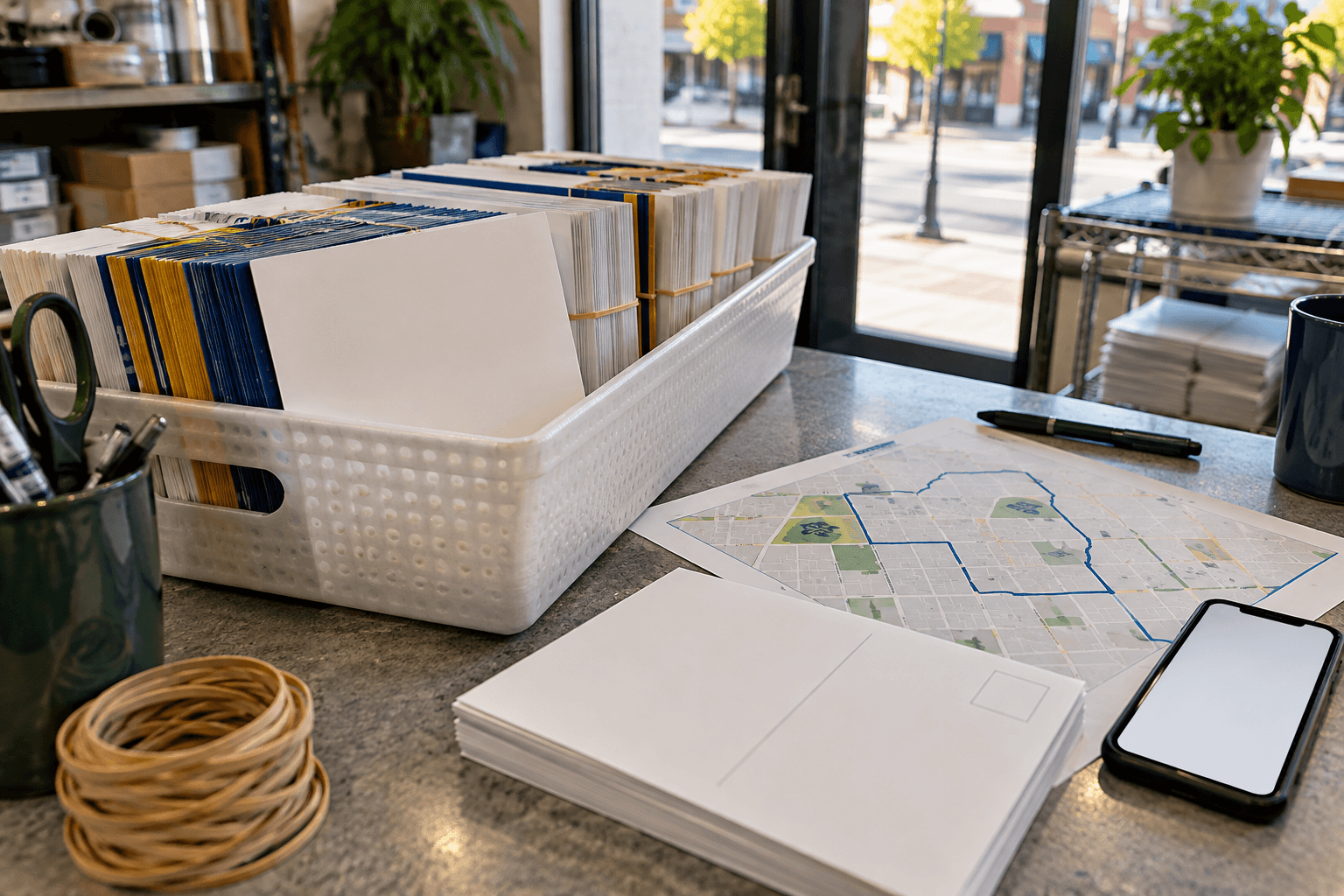
A postcard has a brief, physical advantage. It arrives without a scroll. It sits on a counter, beside keys, under a magnet, or in the small pile of things someone means to check later. For a local business, that moment still has value.
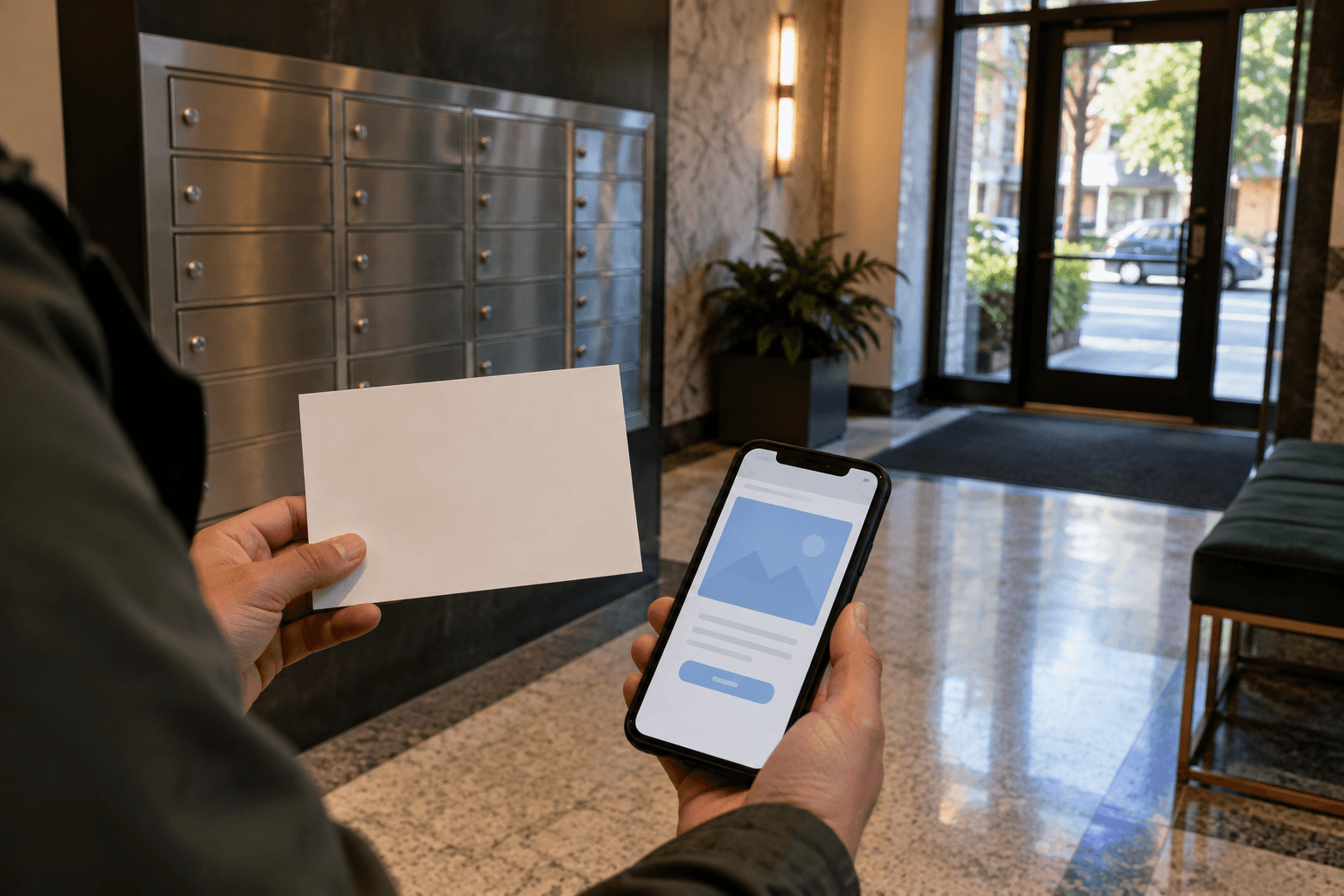
But the postcard is not the whole campaign. The customer who keeps it may still search the business, scan a code, type a URL, check photos, compare reviews, or look for the offer on a phone. If the printed piece is clear and the digital path is vague, the campaign has only moved the confusion from the mailbox to the screen.
Distribution is not the same as direction
USPS Every Door Direct Mail can help small businesses reach routes without building a named mailing list. That solves one practical question: how the piece gets into a neighborhood. It does not solve the strategic question: what the recipient should understand and do next.
A restaurant catering card, showroom seasonal offer, dental new-patient note, med spa consultation card, or professional service invitation each needs a different path. The better question is not how many homes receive the piece. It is whether the recipient can recognize the offer, trust the business, and find the next step before interest cools.
- Point each postcard to a specific page or section, not only the homepage.
- Match the offer name, deadline, location, and next step across print and web.
- Prepare profile images so a search after the postcard confirms the same business.
- Use FAQ answers for practical questions the printed piece cannot hold.
The postcard should borrow hierarchy from the landing page
Many mail pieces are designed first, then the website is asked to receive them. That order can create a mismatch. The postcard promises one thing, the landing page opens with another, and the profile images feel unrelated. The customer has to stitch the campaign together.
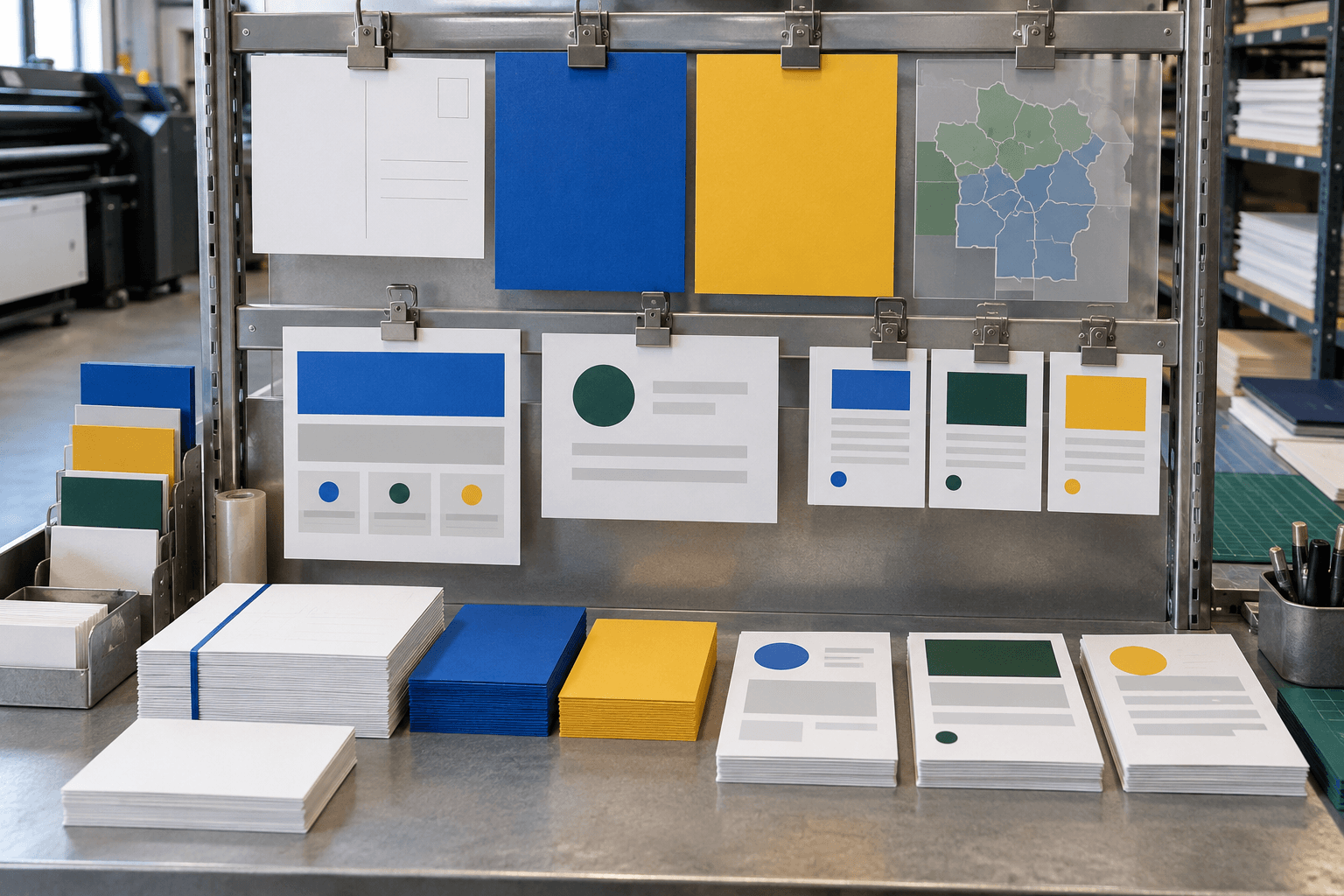
A stronger campaign builds the hierarchy once. The landing page defines the offer, audience, proof, local area, FAQ, and action. The postcard condenses that hierarchy into a physical prompt. The Google profile update, social cover, email follow-up, and printed counter card then borrow the same structure.
Local print still needs production discipline
Direct mail can feel old-fashioned in the best way. It has paper, scale, a real delivery moment, and a chance to be noticed away from the feed. It can also look careless quickly. Weak contrast, cramped type, a vague QR cue, missing service area, or a landing page that loads into a generic homepage can make the business feel less prepared.
The practical kit is simple: a route, an offer, a landing path, profile updates, response expectations, and production-ready files for print and digital crops. The postcard does not need to explain everything. It needs to make the next move obvious enough that the customer does not have to rebuild the campaign in their head.
Frequently asked questions
Should direct mail send people to a homepage?
Usually no. A postcard should send people to a specific landing page or section that matches the offer, location, timing, and next action.
How does direct mail connect to digital marketing?
The printed piece should align with the landing page, Google profile photos or posts, social covers, FAQ answers, and follow-up messages.
What should a local direct mail campaign include?
Include a clear offer, route or audience decision, print-ready postcard, matching landing path, profile update, response plan, and reusable social/email crops.
Need a sharper customer-facing system?
Improve consistency across the brand, website, and sales materials.
Visual Square helps NY/NJ businesses clean up the touchpoints customers actually see first, so the brand feels clearer, more credible, and easier to trust.
Talk through the refresh