
Article · Sep 18, 2026
The Catering Order Has to Travel
Why restaurant and cafe catering materials should carry ordering clarity, packaging cues, reorder paths, and brand recognition beyond the dining room.
8 min read
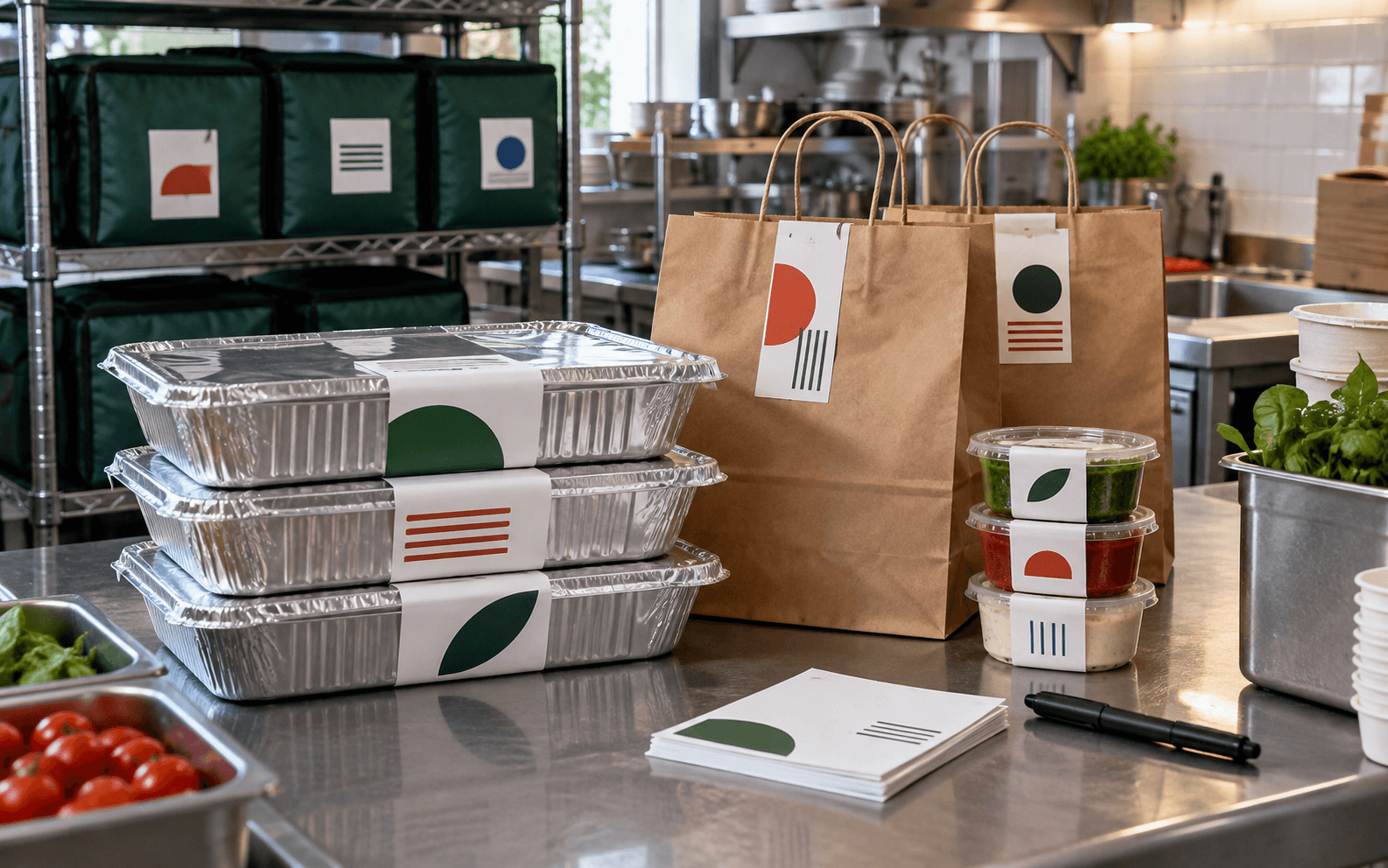
A catering order becomes a restaurant brand moment once it leaves the counter. Bags, trays, labels, insert cards, service cues, and reorder paths help the meal stay recognizable and usable in offices, homes, and events.
In this article
- 01The dining room is not there to help
- 02Useful labels beat decorative labels
- 03The reorder path should arrive with the food
- 04Local recognition is built in small repeats
- 05Design the order after it leaves
The dining room is not there to help
A catering order loses the restaurant's room the moment it leaves. There is no host stand, no menu board, no server explaining what is spicy, no wall color, no music, no easy visual reminder of where the meal came from. There are trays, bags, labels, a receipt, and whoever is trying to set lunch on a conference table before the meeting starts.
That is a brand moment, even if it looks like logistics. The order either arrives with enough clarity to make the restaurant feel organized, or it becomes a pile of good food asking the customer to do too much interpretation.
Useful labels beat decorative labels
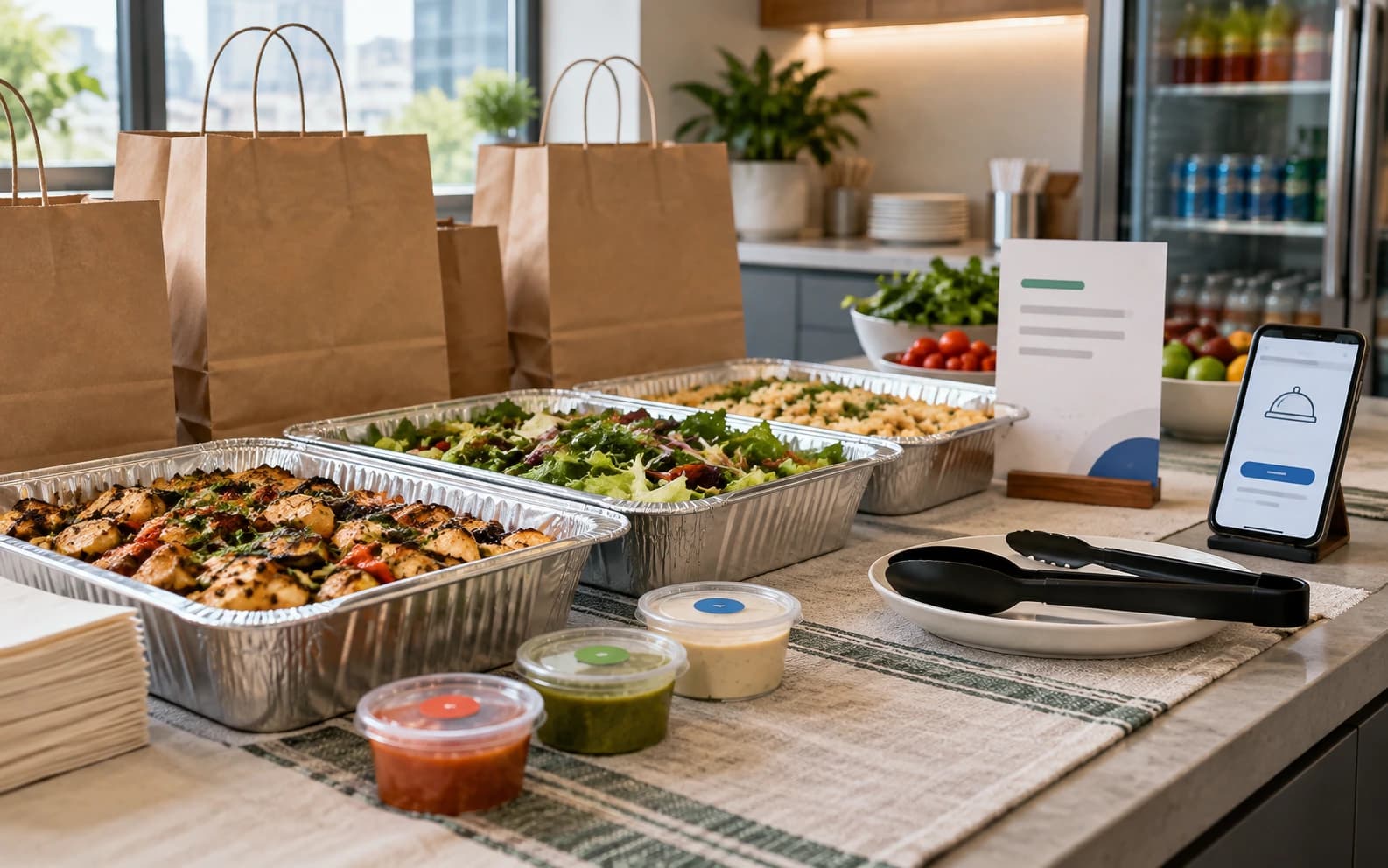
Catering packaging does not need to shout the brand on every surface. It needs to help people use the meal. Which tray is vegetarian? Which sauce belongs with which dish? What should be served first? Where is the reorder path? Which bag has utensils, napkins, or warming instructions?
The Food and Drug Administration's labeling guidance is written for regulated product contexts, not as a restaurant design manual. Still, it is a useful reminder that food-related communication should be accurate and careful. A restaurant should not turn practical packaging into vague decoration when people are making real decisions around food.
- Use clear tray bands or dot labels for dish families and service order.
- Keep allergen or dietary notes factual and visible when they are used.
- Separate setup instructions from brand mood copy.
- Make the reorder path easy to find without covering the food.
The reorder path should arrive with the food
A catering customer may not remember the exact menu item after the event. They may remember that the order arrived on time, that the sauces made sense, that setup was easy, and that the business looked more organized than the alternatives.
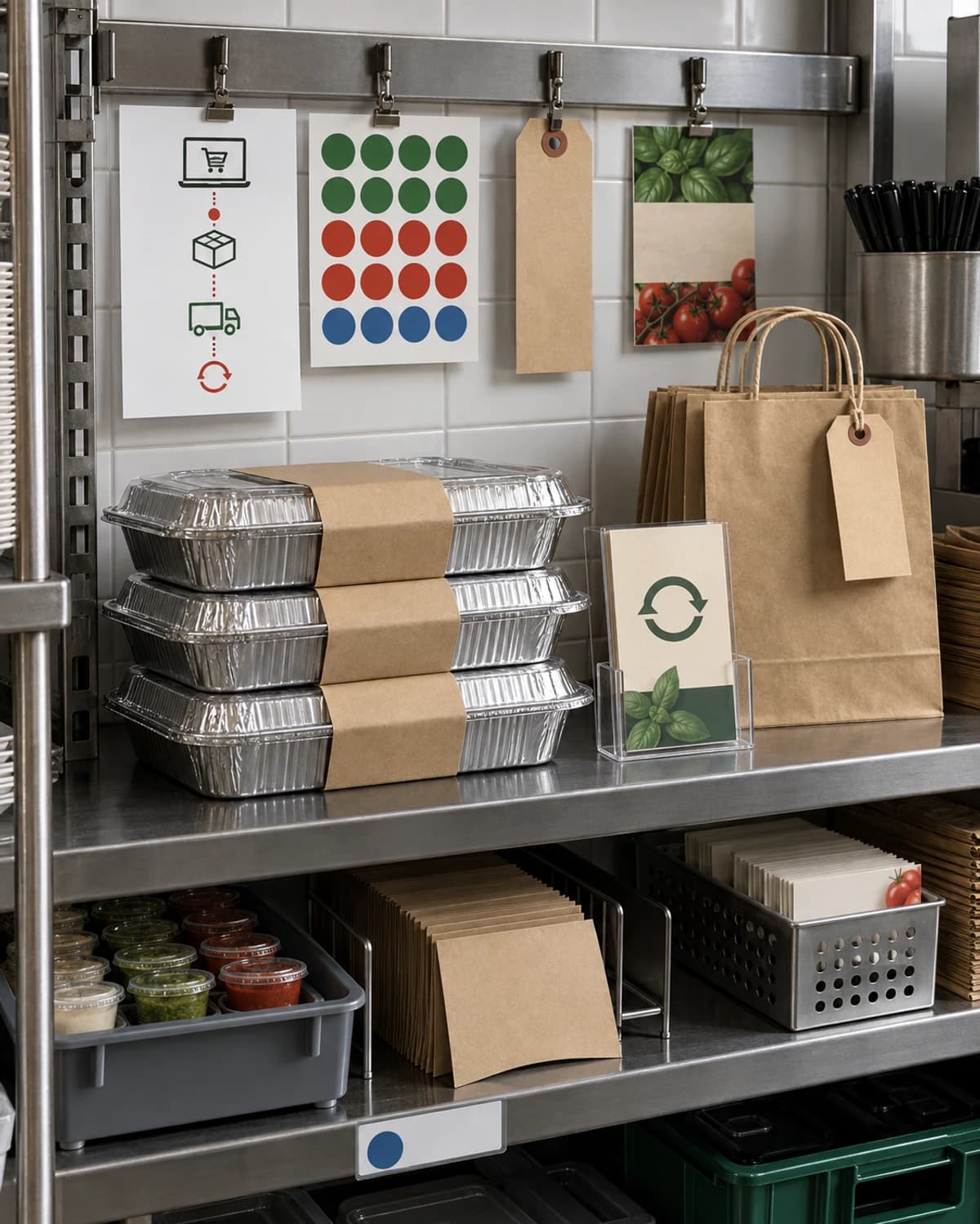
That memory needs a path. A small insert card, QR code, short URL, or labeled menu reminder can carry the next action without turning the meal into an advertisement. The best reorder cue feels like service: here is what you ordered, here is how to do it again, here is who to call if the next order is larger or more specific.
Local recognition is built in small repeats
For NY/NJ restaurants and cafes, catering often moves through offices, schools, salons, clinics, real estate events, houses of worship, and family gatherings. The audience may be new to the restaurant, but they are close enough to become regular customers if the experience is memorable and easy.
Recognition comes from repeated useful details: the same color cue on the bag and tray, the same menu hierarchy on the website and insert, the same photo crop in the social post and ordering page, the same tone in the pickup note and catering card. None of these pieces has to be precious. They have to belong to the same system.
Design the order after it leaves
The practical audit is to place a real catering order on a counter and remove everything the dining room usually explains. What is still clear? What becomes guesswork? What would help the person setting up the food feel confident without calling the restaurant back?
A catering order has to travel. When the trays, labels, bags, and reorder cues are designed as one working kit, the restaurant does not disappear at the door. It arrives with the meal, quietly making lunch easier to serve.
Frequently asked questions
What should restaurant catering materials include?
Start with tray labels or bands, bag tags, setup or serving cards, reorder information, accurate dietary notes where needed, and consistent menu or website cues.
How can catering packaging support restaurant branding?
Packaging supports branding when it makes the order recognizable, organized, easy to serve, and easy to order again without adding visual clutter.
Should catering materials match the restaurant website?
Yes. Menu categories, naming, visual hierarchy, photos, and reorder paths should feel connected across the website, printed inserts, labels, and social posts.
Need a sharper customer-facing system?
Improve consistency across the brand, website, and sales materials.
Visual Square helps NY/NJ businesses clean up the touchpoints customers actually see first, so the brand feels clearer, more credible, and easier to trust.
Talk through the refresh