
Article · Jun 23, 2026
Why AI-Polished Brands Are Starting to Look Less Trustworthy
How local businesses can use AI and templates without losing human texture, specificity, and customer trust.
10 min read
The next design advantage for local businesses is not looking more artificially polished. It is looking specific, human, and consistent across the real customer journey.
In this article
- 01The problem is not AI. It is sameness.
- 02Local businesses need specificity more than perfection
- 03Human texture can be designed intentionally
- 04AI should support the system, not become the system
- 05Where to add texture first
- 06A practical refresh path
The problem is not AI. It is sameness.
AI tools and template libraries have made it easier for small businesses to create websites, social graphics, menus, and promotional images quickly. That speed can be useful, especially for businesses that need to launch or update materials without waiting months.
The risk is that many brands now look polished in the same way. Smooth gradients, generic lifestyle images, over-clean icons, and vague copy can make a real business feel anonymous. Customers may not know why something feels generic, but they can often sense that the brand does not feel specific.
Local businesses need specificity more than perfection
A local business in New York or New Jersey does not win trust by looking like every other brand in its category. It wins trust by making the customer feel that the business is real, organized, close enough to understand, and prepared to serve.
That specificity can show up through local photography, neighborhood references, actual service details, staff or owner perspective, physical materials, and language that sounds like the business rather than a generic marketing paragraph.
- Use real service details instead of category-wide claims.
- Choose photography direction that matches the actual space and customer experience.
- Keep tactile materials such as cards, menus, packaging, and brochures aligned with the digital brand.
- Edit AI-assisted copy until it sounds like a specific business, not a general industry summary.
Human texture can be designed intentionally
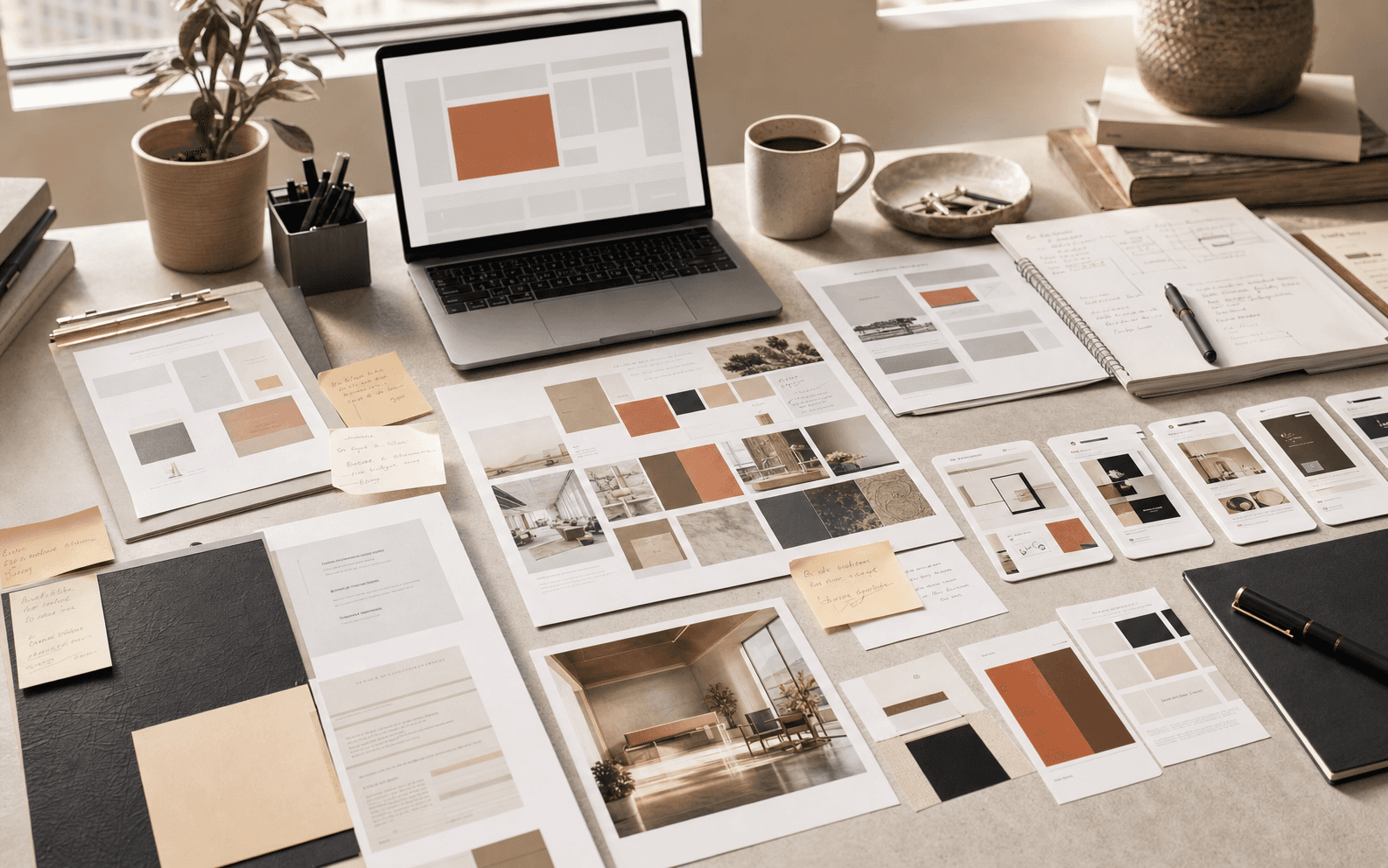
Human texture does not mean messy design. It means the brand includes evidence of real decisions: paper choices, photography style, spacing, tone of voice, product details, local context, and the way printed and digital materials work together.
A med spa might use calm treatment-room details instead of generic beauty images. A cafe might show packaging, menu edges, and counter details instead of only perfect food photos. A professional service firm might use sharp document systems, proposal covers, and team language instead of stock office scenes.
AI should support the system, not become the system
AI can help draft outlines, test headline options, resize social concepts, and explore visual directions. But the brand still needs a human-edited system: what the business stands for, how it explains services, which images are acceptable, how layouts behave, and what files are needed for web and print.
Without that system, AI output becomes a pile of disconnected assets. With the system, AI becomes a production assistant that helps create more variations without losing the core identity.
Where to add texture first
The best places to add human texture are the places customers already notice: website hero images, Google Business Profile photos, service pages, printed menus, brochures, packaging pieces, social profile graphics, and sales PDFs.
Those materials do not need to be loud. They need to feel like they belong to one business. For NY/NJ local businesses competing in crowded categories, that consistency and specificity can do more for trust than another generic visual trend.
A practical refresh path
Start by auditing the assets customers see first. Mark which pieces feel generic, which feel specific, and which feel disconnected from the rest of the brand. Then update the highest-visibility assets before redesigning everything.
A practical refresh might include a sharper website hero, a cleaned-up service page structure, better Google profile visuals, a small print collateral system, and a few production-ready templates for campaigns. That is enough to make the brand feel more human without throwing away useful existing assets.
Frequently asked questions
Should local businesses avoid AI design tools?
No. AI tools can be useful, but the output should be edited into a clear brand system so the business does not look generic or interchangeable.
What makes a brand feel human?
Specific language, real details, thoughtful photography, tactile materials, local context, and consistent execution across web, print, and social touchpoints.
Can a small business add human texture without a full rebrand?
Yes. Updating the most visible assets, such as the website, Google profile, print materials, and social templates, can create a more specific and trustworthy impression.
How should AI-generated visuals be used?
Use them as exploration or support, then refine the final assets so they match the real brand, service experience, and production requirements.
Need a sharper customer-facing system?
Improve consistency across the brand, website, and sales materials.
Visual Square helps NY/NJ businesses clean up the touchpoints customers actually see first, so the brand feels clearer, more credible, and easier to trust.
Talk through the refresh